ENG
 Japanese
 French
 German
 Korean

Global Building Energy Management Software Market – Industry Analysis, Market Size, Share, Growth Drivers, Emerging Trends, Competitive Landscape, Segmentation and Forecast 2025–2034
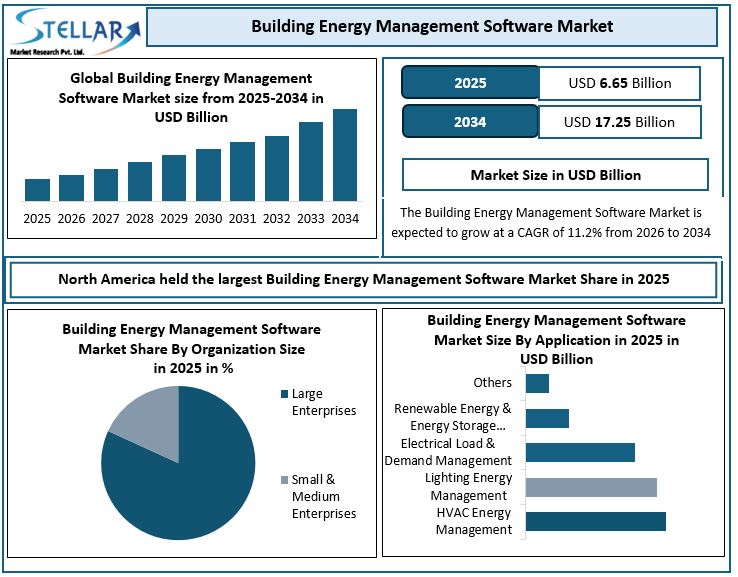
The Global Building Energy Management Software Market was valued at USD 6.65 billion in 2025 and is expected to reach USD 17.25 billion by 2034, registering a CAGR of 11.2 % during 2025–2034.
Global Building Energy Management Software Market Overview
The Global Building Energy Management Software Market comprises digital platforms that monitor, analyse, and optimize energy consumption across commercial, residential and industrial buildings. These solutions integrate smart meters, HVAC systems, lighting controls, occupancy sensors and Internet of Things (IoT) devices to enable real-time monitoring, energy benchmarking, utility bill management, load forecasting, carbon reporting and automated energy optimization. In 2025, buildings accounted for 40% of total energy consumption in the European Union, while 75% of the EU building stock has poor energy performance.
According to the Department of Energy, in the United States buildings consume 40% of national energy and 75% of electricity in 2025. Increasing adoption of cloud-based platforms, AI-powered analytics, predictive maintenance and automated HVAC controls is supporting market development. Rising electricity expenditure, corporate decarbonization targets, smart-building investments and government energy-efficiency initiatives are encouraging organizations to implement advanced energy-management software, although integration costs, legacy infrastructure and cybersecurity concerns remain important challenges.
Why SMR Report?
The SMR report provides a structured view of the Global Building Energy Management Software Market, covering market size, historical performance, forecast revenue, segment-level demand, regional opportunities and competitive positioning. It examines energy monitoring and analytics, optimization and control, compliance reporting, integrated platforms, cloud and on-premises deployment, and adoption across commercial, residential and industrial buildings.
The report also maps the industry value chain, procurement models, software pricing, implementation costs, interoperability standards, cybersecurity considerations and measurable energy-performance outcomes. Company-level coverage compares product portfolios, platform architecture, AI capabilities, customer applications, geographic presence, financial indicators and strategic developments. These insights are intended to help software vendors, building automation providers, system integrators, facility management companies, building owners and investors identify addressable customer groups, assess competitive differentiation, prioritize product development and evaluate market-entry or expansion opportunities.
Global Building Energy Management Software Market Key Insights
- Deployment Preference: Cloud-based and hybrid deployment models are gaining relevance as building operators seek centralized energy monitoring and multi-site reporting. In India, commercial-sector electricity consumption reached 135.2 billion units (TWh) in FY2024–25, compared with 128.6 billion units in FY2023–24, representing growth of 5.1%. This increasing electricity demand creates opportunities for digital platforms that monitor consumption and optimize building operations.
- Building Category: Commercial buildings represent an important application segment due to rising electricity requirements across offices, hospitals, hotels, shopping centres and educational institutions. India's total building energy consumption reached 89.5 million tonnes of oil equivalent (Mtoe) in FY2024–25, including 16.7 Mtoe from commercial buildings and 72.8 Mtoe from residential buildings.
- Building Energy Management Software Market Regional Opportunity: India presents significant growth potential as commercial building electricity demand reached 137 TWh in 2025. Expanding commercial floor space, urban infrastructure development and smart-building investments are supporting demand for energy monitoring and optimization solutions.
- Technology Shift: AI-powered analytics, automated HVAC controls, occupancy-based monitoring and predictive energy management are becoming important capabilities. NITI Aayog estimates that wider deployment of Building Energy Management Systems, occupancy-based controls and improved HVAC zoning could help reduce commercial-building Energy Performance Index (EPI) by 10% under its Current Policy Scenario and 15% under its Net Zero Scenario.
- Customer Priorities: Building owners increasingly prioritize energy benchmarking, real-time consumption monitoring, automated reporting and integration with existing electrical and HVAC infrastructure, driving Building Energy Management Software Market growth. India's Energy Conservation and Sustainable Building Code applies to specified commercial buildings with a connected load of 100 kW or more or a contract demand of 120 kVA or more, reinforcing the importance of building-level energy performance monitoring.
To get more Insights: Request Free Sample Report
-
Building Energy Management Software Market Trends
Transition from Energy Monitoring to Automated OptimizationBuilding owners are moving from periodic utility-bill reviews toward continuous energy monitoring and automated optimisation. Modern platforms combine meter data, equipment schedules, occupancy information and environmental conditions to identify avoidable consumption. Energy teams compare actual consumption with baselines, detect abnormal loads and prioritize corrective actions.
Integration with HVAC and lighting controls enables selected platforms to move from recommendations to automated adjustments while maintaining occupant comfort and operating requirements.
Expansion of Cloud-Based and Multi-Site Energy Management to drive Building Energy Management Software Market growth
Cloud-based energy management software is gaining relevance among organizations that operate geographically distributed offices, retail stores, hotels, hospitals, campuses and industrial properties. Centralized dashboards allow organizations to compare energy intensity, cost, peak demand and emissions across multiple sites. SaaS delivery supports scalable subscriptions and software updates, although customers must evaluate connectivity, data ownership, cybersecurity and integration requirements.
Integration with HVAC and lighting controls enables selected platforms to move from recommendations to automated adjustments while maintaining occupant comfort and operating requirements.
Expansion of Cloud-Based and Multi-Site Energy Management to drive Building Energy Management Software Market growth
Cloud-based energy management software is gaining relevance among organizations that operate geographically distributed offices, retail stores, hotels, hospitals, campuses and industrial properties. Centralized dashboards allow organizations to compare energy intensity, cost, peak demand and emissions across multiple sites. SaaS delivery supports scalable subscriptions and software updates, although customers must evaluate connectivity, data ownership, cybersecurity and integration requirements.
Integration with HVAC and lighting controls enables selected platforms to move from recommendations to automated adjustments while maintaining occupant comfort and operating requirements.
Expansion of Cloud-Based and Multi-Site Energy Management to drive Building Energy Management Software Market growth
Cloud-based energy management software is gaining relevance among organizations that operate geographically distributed offices, retail stores, hotels, hospitals, campuses and industrial properties. Centralized dashboards allow organizations to compare energy intensity, cost, peak demand and emissions across multiple sites. SaaS delivery supports scalable subscriptions and software updates, although customers must evaluate connectivity, data ownership, cybersecurity and integration requirements.
Expansion of Cloud-Based and Multi-Site Energy Management to drive Building Energy Management Software Market growth
Cloud-based energy management software is gaining relevance among organizations that operate geographically distributed offices, retail stores, hotels, hospitals, campuses and industrial properties. Centralized dashboards allow organizations to compare energy intensity, cost, peak demand and emissions across multiple sites. SaaS delivery supports scalable subscriptions and software updates, although customers must evaluate connectivity, data ownership, cybersecurity and integration requirements.
AI-Enabled Forecasting and Fault Detection
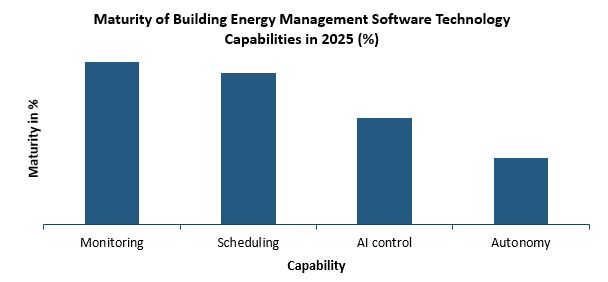
AI and machine learning capabilities are increasingly being integrated into energy management workflows to forecast consumption, identify equipment anomalies, detect HVAC faults and recommend operating changes. Models incorporate weather, occupancy, calendar, tariff and historical meter data. The need for improved building performance is evident in the global sector's energy-intensity progress: UNEP reported a 9.5% decline in building-sector energy intensity, compared with an 18.2% reduction target. AI-enabled software help facility teams identify inefficiencies and prioritize corrective actions, although actual results depend on sensor coverage, data quality, equipment information and validation against building performance.
Integration of Energy, Carbon and Sustainability Reporting to Drive Building Energy Management Software Market Growth
Organizations increasingly expect energy management platforms to connect consumption data with carbon accounting and sustainability reporting. Software map electricity and fuel use to emissions factors, monitor energy performance indicators and prepare data for internal or regulatory disclosures. In the European Union, buildings accounted for around 40% of total energy consumption and around 50% of gas consumption in 2025. These figures strengthen the need for accurate energy monitoring, consumption reporting and efficiency improvements. Integration with renewable generation, battery storage and grid carbon-intensity information supports energy procurement and decarbonization decisions.
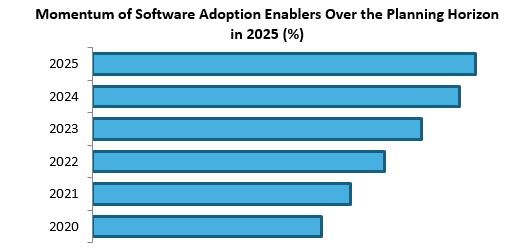
Retrofit-Oriented Software Adoption
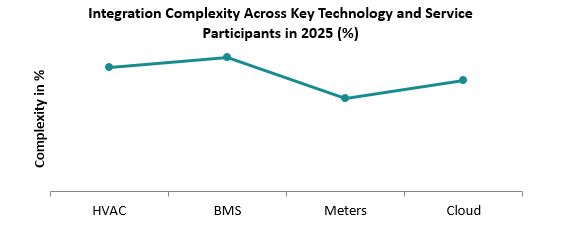
A substantial opportunity exists in existing buildings that use legacy automation systems or fragmented monitoring tools. Software gateways, open protocols and API-based connectors bring existing meters and controls into modern analytics platforms without requiring complete replacement of building infrastructure. The European Commission also indicates that deep energy renovation of a very low-performing building reduces energy consumption by up to 80%. Retrofit projects nevertheless require careful assessment of device compatibility, data quality, network security and commissioning resources.
Table: Retrofit-Oriented Software Adoptio
Retrofit Area
Software Application
Key Functionality
Expected Outcome
HVAC System Upgrades
Building Energy Management Software
HVAC monitoring, automated controls and energy optimization
Reduced energy consumption and operating costs
Smart Meter Integration
Energy Monitoring Software
Real-time electricity consumption tracking and reporting
Improved energy visibility and usage management
Building Automation Retrofitting
Building Automation Software
Integration of legacy equipment with modern control systems
Improved automation and operational efficiency
Lighting System Modernization
Lighting Energy Management Software
Automated lighting controls, occupancy sensing and scheduling
Reduced electricity consumption
IoT Sensor Installation
IoT-Based Energy Management Software
Connected sensors, real-time data collection and analytics
Improved monitoring and fault detection
Legacy System Integration
Cloud-Based Energy Management Software
Centralized monitoring and interoperability with existing systems
Simplified energy management across facilities
Predictive Maintenance Upgrades
AI-Based Energy Management Software
Equipment performance tracking and predictive diagnostics
Reduced downtime and maintenance expenses
Multi-Building Portfolio Upgrades
Enterprise Energy Management Platforms
Centralized dashboards, benchmarking and reporting
Consistent energy management across multiple buildings
Building Energy Management Software Market Dynamics
Building Energy Management Software Market Drivers
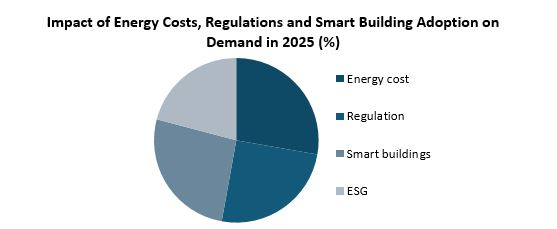
Rising electricity expenditure: Increasing operating expenditure encourages building owners to monitor energy consumption at equipment, floor and portfolio levels, driving Building Energy Management Software Market growth. CISA released 12 Industrial Control Systems (ICS) cybersecurity advisories in December 2025, including vulnerabilities associated with Siemens Building X Security Manager Edge Controller and Johnson Controls iSTAR products. This highlights the growing importance of cybersecurity capabilities in connected building management solutions.
High building-sector energy consumption: Buildings account for 32% of global energy use and 34% of global CO? emissions , strengthening demand for software that supports energy monitoring, optimization and emissions tracking.
Building energy performance requirements: In the EU, 75% of buildings have poor energy performance, while the annual renovation rate is around 1%. Building-performance improvement initiatives encourage the use of digital monitoring and reporting platforms.
AI-enabled analytics and automation: AI-based forecasting, anomaly detection and fault diagnostics help facility teams identify inefficient operations and prioritize maintenance activities.
Building Energy Management Software Market Restraints
Cybersecurity and data privacy: Connecting building systems with enterprise IT networks and cloud platforms increases the need for secure access controls, encryption, network segmentation and continuous monitoring.
Limited technical expertise: Building owners lack specialists capable of configuring analytics, interpreting software recommendations and maintaining long-term optimization programs.
Unclear energy-savings measurement: Energy consumption changes with weather, occupancy, operating hours and building utilization. Without a consistent baseline, it be difficult to attribute improvements directly to software implementation.
Implementation and integration expenditure: Software deployment require additional spending on meters, sensors, gateways, system integration and employee training, particularly in older buildings. Examines how software developers, technology providers, hardware manufacturers, system integrators, building owners and facility managers contribute to value creation, technology integration, deployment and service delivery across the ecosystem.
Building Energy Management Software Market Opportunities
AI-assisted HVAC optimization: HVAC equipment represents an important application area for energy management. AI-based scheduling, load forecasting and fault detection help identify avoidable energy consumption while maintaining indoor comfort.
Retrofit software and protocol gateways: With 85% of EU buildings constructed before 2000, vendors target existing properties through software integrations that connect legacy meters, controllers and building automation systems.
Integration with renewable energy and storage: Software that connects solar generation, battery storage, EV charging and demand-response programs support coordinated building energy operations.
Solutions for small and medium-sized properties: The U.S. commercial building stock includes 2.83 million buildings measuring 1,001–5,000 square feet, creating an opportunity for simplified, subscription-based energy monitoring platforms.
Portfolio benchmarking and carbon reporting: Organizations operating offices, hospitals, hotels, retail stores and industrial facilities use centralised software to compare energy intensity, identify underperforming sites and monitor emissions-reduction progress.
Global Building Energy Management Software Market Segment AnalysisBuilding Energy Management Software Market by Deployment
Cloud dominated Building Energy Management Software Market in 2025. Cloud-Based and Hybrid Deployment Support the Digitalisation of Building Energy Management
Cloud-based and hybrid deployment models are gaining relevance as building operators seek centralized energy monitoring, remote access and integration across multiple facilities. Cloud platforms enable organizations to collect energy information from smart meters, HVAC equipment, lighting systems and connected sensors through centralized dashboards. On-premises software remains relevant for facilities that require local data processing, greater control over operational technology networks and specific data-security arrangements, drives Building Energy Management Software Market growth.
According to the International Energy Agency's Energy Efficiency 2025, buildings account for around 30% of global energy demand, highlighting the importance of monitoring and optimizing energy consumption. The building energy intensity is 129 kWh/m² in 2024, with a 25% reduction required by 2030 to align with the net-zero pathway. These requirements create opportunities for scalable software platforms offering energy analytics, automated reporting and performance monitoring.
Building Energy Management Software Market by Building Type
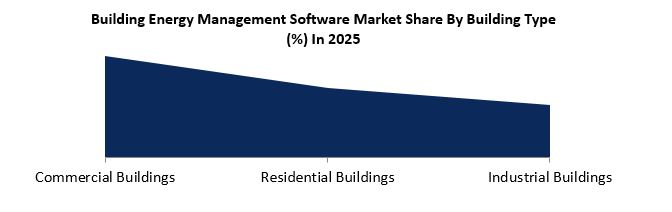
Commercial Building Energy Management Software Market in 2025. Commercial buildings represent an important application area for building energy management software because offices, shopping centres, hotels, hospitals and educational institutions operate multiple energy-intensive systems. Software platforms help facility managers monitor electricity consumption, HVAC performance, lighting operations and equipment efficiency while identifying opportunities to reduce avoidable energy use.
The role of building energy management systems, occupancy-based controls and improved HVAC zoning in reducing building energy intensity. Residential buildings offer opportunities through smart meters and connected energy controls, while industrial facilities use software to monitor utility consumption across production sites, driving Building Energy Management Software industry growth. Hospitals, airports, hotels and government facilities also require energy management platforms to coordinate complex operating schedules and continuous energy requirements, driving Building Energy Management Software Market growth.
Building Energy Management Software Market Regional Insights
The Global Building Energy Management Software Market is gaining traction across regions as building owners increasingly focus on energy efficiency, operational cost reduction and sustainable infrastructure. North America dominated the Building Energy Management Software Market in 2025, supported by substantial commercial building energy consumption and investments in energy-efficient infrastructure.
Asia Pacific is experiencing increased demand supported by urbanization, commercial construction, smart-city initiatives and rising electricity consumption. Countries such as China, India, Japan, South Korea and Singapore are investing in connected infrastructure and building automation. South America is gradually adopting energy monitoring and optimization solutions across commercial properties and institutional buildings. The Middle East and Africa offer opportunities through large-scale commercial developments, airports, hospitals, hotels and energy-intensive cooling infrastructure, boosting Building Energy Management Software Market growth. Across these regions, IoT integration, AI-based analytics and centralized energy monitoring are becoming important capabilities for modern building operations.
Building Energy Management Software Market Competitive Landscape
The global Building Energy Management Software Market is characterized by strong competition among established building automation manufacturers, industrial technology providers and specialized software companies. Key players include Schneider Electric, Siemens AG, Honeywell International, Johnson Controls, ABB Ltd., Eaton Corporation, Carrier Global, Trane Technologies, and others.
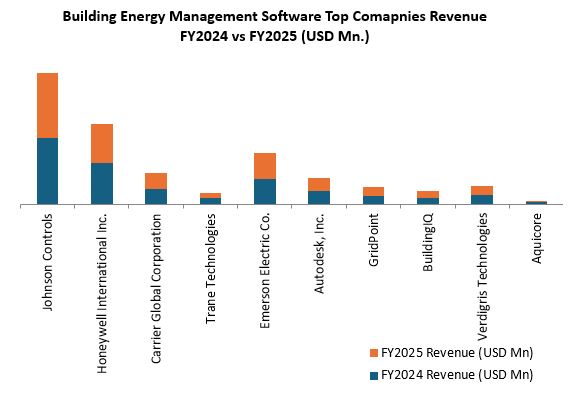
Schneider Electric competes through its EcoStruxure platform, while Siemens offers Desigo and Building X solutions. Honeywell strengthens its position through Forge, and Johnson Controls focuses on OpenBlue building management technologies. More than 150 vendors operate in the broader Building Energy Management System market, intensifying competition across software capabilities, integration and customer support. Companies increasingly differentiate themselves through AI-powered analytics, cloud deployment, predictive maintenance, IoT connectivity and real-time energy monitoring. Strategic partnerships, platform upgrades, acquisitions and expansion into emerging markets remain important competitive strategies.
Global Building Energy Management Software Market Scope
Global Building Energy Management Software Market
Report Coverage
Details
Base Year:
2025
Forecast Period:
2026-2034
Historical Data:
2020 to 2025
Market Size in 2025:
USD 6.62 Billion
Forecast Period 2026 to 2034 CAGR:
11.2%
Market Size in 2034:
USD 17.25 Billion
Building Energy Management Software Segment Analysis
By Software Type
Energy Monitoring & Analytics Software
Energy Optimization & Control Software
Energy Reporting & Compliance Software
Integrated Building Energy Management Platforms
Others
By Deployment
Cloud-Based
On-Premises
By Building Type
Commercial Buildings
Offices
Retail Buildings
Hotels & Hospitality
Healthcare Facilities
Educational & Institutional Buildings
Others
Residential Buildings
Single-Family Residential
Multi-Family Residential
Industrial Buildings
Manufacturing Facilities
Warehouses & Logistics Facilities
Others
By Organization Size
Large Enterprises
Small & Medium Enterprises
By Application
HVAC Energy Management
Lighting Energy Management
Electrical Load & Demand Management
Renewable Energy & Energy Storage Management
Others
Key players/Competitors profiles covered in the Building Energy Management Software Market report from a strategic perspective
North America
2. Honeywell International Inc.
3. Carrier Global Corporation
4. Trane Technologies
5. Emerson Electric Co.
6. Autodesk, Inc.
7. GridPoint
8. BuildingIQ
9. Verdigris Technologies
10. Aquicore
11. 75F
12. Facilio
13. BrainBox AI
14. CopperTree Analytics
15. Delta Controls
Europe
16. Siemens AG
17. Schneider Electric SE
18. ABB Ltd.
19. Bosch Building Technologies
20. Danfoss A/S
21. ENGIE
22. Sauter AG
23. Kieback&Peter GmbH & Co. KG
24. Priva B.V.
25. Distech Controls
26. Trend Control Systems
27. Centrica Business Solutions
28. Spacewell
29. Wattsense
30. zenon (COPA-DATA)
Asia Pacific
31. Mitsubishi Electric Corporation
32. Daikin Industries, Ltd.
33. Panasonic Corporation
34. Hitachi, Ltd.
35. Toshiba Corporation
36. Azbil Corporation
37. Yokogawa Electric Corporation
38. Delta Electronics, Inc.
39. Advantech Co., Ltd.
40. Samsung Electronics Co., Ltd.
41. LG Electronics Inc.
42. Huawei Technologies Co., Ltd.
43. Envision Digital
44. Infosys Limited
45. Wipro Limited
Middle East & Africa
46. ALEC Engineering and Contracting LLC
47. Moro Hub
48. Green Wave Energy
South America
49. WEG S.A.
50. GreenAnt
Frequently Asked Questions
Global Building Energy Management Software Market –Table of Contents
1. Building Energy Management Software Market Overview
1.1 Global Building Energy Management Software Industry Landscape
1.1.1 Global Building Energy Management Software Industry Structure and Market Definition
1.1.2 Market Structure and Major Technology Providers
1.1.3 Building Energy Monitoring, Management and Optimization Applications
1.1.4 Commercial, Residential and Industrial Building Adoption Trends
1.1.5 Industry Development and Emerging Software Technology Trends
1.2 Building Energy Management Software Market Scope and Research Framework
1.2.1 Software-Only Market Boundary and Inclusion Criteria
1.2.2 Revenue Recognition across Licenses, Subscriptions and Software Services
1.2.3 Historical Data, Base Year and Forecast Period
1.2.4 Key Market Assumptions and Forecast Methodology
2. Building Energy Management Software Market Size, Growth Trends and Forecast (2026–2034)
2.1 Global Building Energy Management Software Market Size and Forecast
2.1.1 Global Market Value (USD Billion), 2025–2034
2.1.2 Historical Market Performance and Year-on-Year Growth
2.1.3 Market Revenue Forecast and CAGR Analysis
2.1.4 Market Growth Contribution by Segment and Region
2.2 Building Energy Management Software Market by Software Type
2.2.1 Energy Monitoring & Analytics Software
2.2.2 Energy Optimization & Control Software
2.2.3 Energy Reporting & Compliance Software
2.2.4 Integrated Building Energy Management Platforms
2.2.5 Other Building Energy Software
2.3 Building Energy Management Software Market by Deployment
2.3.1 Cloud-Based
2.3.2 On-Premises
2.3.3 Hybrid Deployment Models
2.4 Building Energy Management Software Market by Building Type
2.4.1 Commercial Buildings
2.4.1.1 Offices
2.4.1.2 Retail Buildings
2.4.1.3 Hotels & Hospitality
2.4.1.4 Healthcare Facilities
2.4.1.5 Educational & Institutional Buildings
2.4.1.6 Other Commercial Buildings
2.4.2 Residential Buildings
2.4.2.1 Single-Family Residential
2.4.2.2 Multi-Family Residential
2.4.3 Industrial Buildings
2.4.3.1 Manufacturing Facilities
2.4.3.2 Warehouses & Logistics Facilities
2.4.3.3 Other Industrial Buildings
2.5 Building Energy Management Software Market by Organization Size
2.5.1 Large Enterprises
2.5.2 Small & Medium Enterprises
2.6 Building Energy Management Software Market by Application
2.6.1 HVAC Energy Management
2.6.2 Lighting Energy Management
2.6.3 Electrical Load & Demand Management
2.6.4 Renewable Energy & Energy Storage Management
2.6.5 Other Building Energy Applications
2.7 Building Energy Management Software Market Regional and Country-Wise Size and Forecast
2.7.1 North America
2.7.1.1 United States
2.7.1.2 ada
2.7.1.3 Mexico
2.7.2 Europe
2.7.2.1 United Kingdom
2.7.2.2 Germany
2.7.2.3 France
2.7.2.4 Italy
2.7.2.5 Spain
2.7.2.6 Netherlands
2.7.2.7 Sweden
2.7.2.8 Switzerland
2.7.2.9 Denmark
2.7.2.10 Norway
2.7.2.11 Finland
2.7.2.12 Poland
2.7.2.13 Belgium
2.7.2.14 Austria
2.7.2.15 Rest of Europe
2.7.3 Asia Pacific
2.7.3.1 China
2.7.3.2 Japan
2.7.3.3 India
2.7.3.4 South Korea
2.7.3.5 Australia
2.7.3.6 Singapore
2.7.3.7 Indonesia
2.7.3.8 Malaysia
2.7.3.9 Thailand
2.7.3.10 Vietnam
2.7.3.11 Philippines
2.7.3.12 Taiwan
2.7.3.13 New Zealand
2.7.3.14 Rest of Asia Pacific
2.7.4 Middle East & Africa
2.7.4.1 Saudi Arabia
2.7.4.2 United Arab Emirates
2.7.4.3 Qatar
2.7.4.4 Kuwait
2.7.4.5 Oman
2.7.4.6 Bahrain
2.7.4.7 South Africa
2.7.4.8 Egypt
2.7.4.9 Nigeria
2.7.4.10 Kenya
2.7.4.11 Rest of Middle East & Africa
2.7.5 South America
2.7.5.1 Brazil
2.7.5.2 Argentina
2.7.5.3 Chile
2.7.5.4 Colombia
2.7.5.5 Peru
2.7.5.6 Rest of South America
2.8 Building Energy Management Software Revenue Distribution and Forecast Assumptions
2.8.1 Software Revenue Distribution by Deployment Model
2.8.2 Market Revenue Distribution across Major Building Categories
2.8.3 Market Growth Opportunities and Forecast Assumptions
3. Building Energy Management Software Industry Value Chain and Business Ecosystem
3.1 Global Building Energy Management Software Value Chain Structure
3.1.1 Software Research, Development and Product Engineering
3.1.2 Data Acquisition, Analytics and Platform Delivery
3.1.3 Implementation, Integration and Lifecycle Support
3.2 Software Developers and Building Automation Technology Providers
3.2.1 Building Energy Software Vendors
3.2.2 Building Automation OEMs and Control-System Providers
3.3 HVAC Equipment Manufacturers and Building Control System Suppliers
3.3.1 HVAC and Thermal-System Suppliers
3.3.2 Metering, Sensor and Controller Manufacturers
3.4 System Integrators, Implementation Partners and Software Distributors
3.4.1 System Integration and Commissioning Partners
3.4.2 Software Resellers and Technology Distribution Channels
3.5 Building Owners, Facility Management Companies and Enterprise Customers
3.5.1 Commercial Property Owners
3.5.2 Facility Management and Energy Service Companies
3.5.3 Enterprise and Public-Sector Customers
4. Building Energy Management Software Market Drivers, Restraints and Opportunities
4.1 Market Drivers
4.1.1 Rising Energy Costs and Demand for Building Operational Efficiency
4.1.2 Government Building Energy Efficiency Regulations and Decarbonization Policies
4.1.3 Increasing Adoption of Smart Buildings and Digital Energy Management Technologies
4.2 Market Restraints
4.2.1 High Software Implementation Costs and Legacy System Integration Challenges
4.2.2 Cybersecurity, Data Privacy and Operational Technology Risks
4.2.3 Shortage of Skilled Energy Data and Building Automation Professionals
4.3 Market Opportunities
4.3.1 Growth Opportunities in AI-Enabled Building Energy Optimization
4.3.2 Retrofit Opportunities across Existing Building Infrastructure
4.3.3 Integration with Renewable Energy, Storage and Demand Response
5. Building Energy Management Software Regulatory and Compliance Landscape
5.1 International Energy Management Standards and Regulatory Frameworks
5.1.1 Global Energy Efficiency Policy Landscape
5.1.2 Building Energy Performance and Disclosure Requirements
5.2 ISO 50001 Energy Management System Requirements and Software Applications
5.2.1 Energy Review, Baselines and Energy Performance Indicators
5.2.2 Software Support for Continual Improvement and Auditing
5.3 Building Energy Performance Standards and Mandatory Reporting Regulations
5.3.1 Building Energy Benchmarking and Disclosure
5.3.2 Energy Performance Certificates and Building Codes
5.4 Building Automation Cybersecurity and Data Protection Requirements
5.4.1 Operational Technology Security
5.4.2 Data Governance, Privacy and Access Controls
5.5 Regulatory Compliance Opportunities for Building Energy Software Providers
5.5.1 Automated Compliance Reporting
5.5.2 Audit-Ready Energy and Emissions Data
6. Building Energy Management Software Technology and Innovation Landscape
6.1 Advanced Energy Monitoring and Real-Time Building Performance Analytics
6.1.1 Meter Data Acquisition and Interval Analytics
6.1.2 Energy Benchmarking and Performance Dashboards
6.2 Artificial Intelligence and Machine Learning Integration
6.2.1 AI-Based Energy Forecasting
6.2.2 Automated Optimization and Decision Support
6.3 Cloud-Based Energy Management Software and SaaS Technology Developments
6.3.1 Cloud-Native Platform Architecture
6.3.2 SaaS Licensing and Multi-Tenant Delivery
6.4 Predictive Energy Consumption Forecasting and Intelligent Optimization Technologies
6.4.1 Load Forecasting and Peak Demand Prediction
6.4.2 Occupancy-Aware Scheduling and Control
6.5 Emerging Software Innovations Supporting Autonomous and Energy-Efficient Buildings
6.5.1 Digital Twins and Building Analytics
6.5.2 Edge AI and Autonomous Building Operations
7. Building Energy Management Software Pricing and Cost Structure Analysis
7.1 Software Licensing, Subscription and Usage-Based Pricing Models
7.1.1 Per-Building and Per-Site Licensing
7.1.2 Portfolio and Meter-Based Pricing
7.1.3 SaaS Subscription and Usage-Based Models
7.2 Initial Software Implementation, Configuration and Integration Costs
7.2.1 Software Deployment and Commissioning
7.2.2 Data Migration and System Integration
7.3 Annual Software Maintenance, Technical Support and Upgrade Expenditures
7.3.1 Maintenance and Support Contracts
7.3.2 Software Updates and Feature Upgrades
7.4 Cloud-Based versus On-Premises Software Total Cost of Ownership
7.4.1 Infrastructure and Hosting Costs
7.4.2 Five-Year Total Cost of Ownership
7.5 Software Pricing Competitiveness and Cost Optimization Opportunities
7.5.1 Vendor Pricing Comparison
7.5.2 Cost Optimization and Contract Flexibility
8. Building Energy Management Software Integration and Interoperability Landscape
8.1 Integration with Existing Building Management Systems and HVAC Infrastructure
8.1.1 BMS and BEMS Integration Architecture
8.1.2 HVAC and Lighting System Connectivity
8.2 BACnet, Modbus, KNX and Other Building Communication Protocol Compatibility
8.2.1 BACnet and Modbus Support
8.2.2 KNX and Other Open Protocols
8.3 Third-Party Software Integration and Application Programming Interface Capabilities
8.3.1 API Connectivity and Data Exchange
8.3.2 Enterprise and Utility Data Integration
8.4 Legacy Building Infrastructure Modernization and Software Migration Challenges
8.4.1 Legacy System Connectivity
8.4.2 Data Migration and System Commissioning
8.5 Open-Architecture Software Platforms and Vendor Lock-In Considerations
8.5.1 Open versus Proprietary Architecture
8.5.2 Data Portability and Platform Flexibility
9. Building Energy Management Software Energy Efficiency Performance and ROI Analysis
9.1 Energy Consumption Monitoring versus Measurable Energy Efficiency Improvements
9.1.1 Energy Visibility and Consumption Baselines
9.1.2 Monitoring versus Verified Savings
9.2 Building Energy Savings Potential across Commercial, Residential and Industrial Facilities
9.2.1 Commercial Building Applications
9.2.2 Residential and Multi-Family Applications
9.2.3 Industrial and Logistics Applications
9.3 Energy Performance Baseline Development and Savings Verification Methodologies
9.3.1 Baseline Normalization
9.3.2 Measurement and Verification Frameworks
9.4 Software Implementation Return on Investment and Customer Payback Period Analysis
9.4.1 Energy Cost Reduction and Operating Benefits
9.4.2 Customer Payback and Lifecycle Value
9.5 Comparative Energy Optimization Performance of Leading Software Platforms
9.5.1 Platform-Level Capability Comparison
9.5.2 Performance Evidence and Savings Attribution
10. Building Energy Management Software Customer Adoption and Purchasing Landscape
10.1 Building Owners and Facility Managers' Energy Management Software Requirements
10.1.1 Energy Visibility and Operational Requirements
10.1.2 Multi-Site and Portfolio Management Needs
10.2 Enterprise Software Procurement and Technology Vendor Selection Criteria
10.2.1 Procurement Stakeholders and Approval Process
10.2.2 Technical, Commercial and Security Evaluation
10.3 Customer Preferences for User-Friendly Dashboards and Actionable Energy Insights
10.3.1 Dashboard and Reporting Requirements
10.3.2 Mobile Access and Role-Based Views
10.4 Software Adoption Barriers, Implementation Complexity and Customer Satisfaction
10.4.1 Budget and Integration Constraints
10.4.2 Training, Change Management and Adoption
10.4.3 Customer Satisfaction and Retention Drivers
11. Siemens Desigo Software Capabilities and Product Positioning
11.1 Siemens Desigo CC Software Architecture and Building Management Functionality
11.1.1 Platform Architecture and Modular Design
11.1.2 Centralized Building Operations and Control
11.2 Energy Consumption Monitoring, Reporting and Building Automation Capabilities
11.2.1 Meter Data and Energy Reporting
11.2.2 Building Automation and Analytics
11.3 HVAC Control, Equipment Scheduling and Energy Optimization Features
11.3.1 HVAC Scheduling and Setpoint Control
11.3.2 Energy Optimization Workflows
11.4 Software Scalability, Interoperability and Third-Party Integration
11.4.1 Open Protocols and API Integration
11.4.2 Multi-Site Scalability
11.5 Siemens Desigo Licensing, Deployment and Implementation Considerations
11.5.1 On-Premises and Service-Based Deployment
11.5.2 Implementation and Lifecycle Support
12. Competitive Benchmarking of Leading Building Energy Management Software Platforms
12.1 Siemens Desigo versus Schneider Electric EcoStruxure
12.1.1 Platform Functionality and Architecture
12.1.2 Energy Analytics and Optimization
12.2 Siemens Desigo versus Johnson Controls Metasys
12.2.1 Building Control and Energy Management Capabilities
12.2.2 Integration and Lifecycle Support
12.3 Siemens Desigo versus Honeywell Forge
12.3.1 Analytics, AI and Reporting Capabilities
12.3.2 Deployment and Enterprise Scalability
12.4 Siemens Desigo versus ABB Building Energy Management Solutions
12.4.1 Software Portfolio and Interoperability
12.4.2 Application Coverage
12.5 Comparative Benchmarking of Functionality, Pricing, Usability and Energy Optimization
12.5.1 Comparative Feature Matrix
12.5.2 Commercial and Technical Differentiation
13. Building Energy Management Software User Interface and Dashboard Benchmarking
13.1 Software User Interface Design and Navigation Simplicity
13.1.1 Dashboard Layout and Navigation
13.1.2 Role-Based User Experience
13.2 Real-Time Energy Consumption Dashboards and Data Visualization
13.2.1 Meter-Level Visualization
13.2.2 Energy KPIs and Benchmarking
13.3 Customizable Energy Reports and Advanced Analytical Capabilities
13.3.1 Report Configuration
13.3.2 Trend Analysis and Drill-Down
13.4 Mobile Accessibility, Remote Monitoring and Multi-Site Dashboard Management
13.4.1 Mobile and Remote Access
13.4.2 Multi-Site Portfolio Views
13.5 Software Interface Modernization Opportunities and User Experience Gaps
13.5.1 Usability Gaps
13.5.2 Opportunities for AI-Assisted Interfaces
14. Building Energy Management Software Pricing, Licensing and Total Cost of Ownership
14.1 Software Licensing and Subscription-Based Pricing Models
14.1.1 License Structures
14.1.2 Subscription and Recurring Revenue Models
14.2 Initial Software Deployment, Integration and Configuration Expenditures
14.2.1 Deployment Costs
14.2.2 Integration and Configuration Costs
14.3 Annual Software Maintenance, Technical Support and Upgrade Costs
14.3.1 Maintenance Contracts
14.3.2 Upgrade and Support Costs
14.4 Cloud-Based versus On-Premises Software Cost Comparison
14.4.1 Hosting and Infrastructure Costs
14.4.2 Operating and Administration Costs
14.5 Total Cost of Ownership Benchmarking across Major Software Providers
14.5.1 Three-Year and Five-Year TCO
14.5.2 Cost-to-Value Comparison
15. Siemens Desigo Software Architecture and Technology Integration Benchmarking
15.1 Siemens Desigo CC System Architecture and Building Control Integration
15.1.1 System Architecture
15.1.2 Building Control Integration
15.2 Integration with HVAC, Lighting, Security and Building Automation Systems
15.2.1 HVAC and Lighting Integration
15.2.2 Security and Safety Integration
15.3 Communication Protocol Compatibility Including BACnet, KNX and Modbus
15.3.1 Protocol Compatibility
15.3.2 Device and Gateway Connectivity
15.4 Third-Party Application Integration and API Connectivity
15.4.1 API Framework
15.4.2 Enterprise Application Integration
15.5 Comparative Architecture Benchmarking with Competing Software Platforms
15.5.1 Architecture and Scalability
15.5.2 Integration Flexibility
16. Building Energy Management Software Functional Capability Benchmarking
16.1 Real-Time Energy Monitoring and Consumption Data Acquisition
16.1.1 Meter and Sensor Data Collection
16.1.2 Data Quality and Validation
16.2 Automated Energy Optimization and Intelligent Building Control
16.2.1 HVAC and Lighting Optimization
16.2.2 Demand and Load Control
16.3 Energy Performance Reporting, Forecasting and Analytical Functionality
16.3.1 Reporting and Compliance
16.3.2 Forecasting and Analytics
16.4 Multi-Building Portfolio Management and Centralized Energy Operations
16.4.1 Portfolio Dashboards
16.4.2 Centralized Operations
16.5 Comparative Functional Capability Matrix of Leading Software Providers
16.5.1 Core Functionality Matrix
16.5.2 Advanced Analytics and AI Matrix
17. Building Energy Management Software Deployment and Implementation Benchmarking
17.1 Software Deployment Architecture and Technical Infrastructure Requirements
17.1.1 Cloud, On-Premises and Hybrid Architecture
17.1.2 Network and Data Infrastructure
17.2 Integration Complexity with Existing Building Management Systems
17.2.1 Legacy System Compatibility
17.2.2 Data and Protocol Integration
17.3 Software Installation, Configuration and Commissioning Requirements
17.3.1 Installation and Configuration
17.3.2 Testing and Commissioning
17.4 Implementation Timelines and System Integrator Dependency
17.4.1 Project Timelines
17.4.2 Integrator and Partner Requirements
17.5 Comparative Deployment Challenges and Implementation Cost Factors
17.5.1 Deployment Risk Comparison
17.5.2 Implementation Cost Drivers
18. Building Energy Management Software Interoperability and Vendor Lock-In Analysis
18.1 Open-Protocol Compatibility and Third-Party Equipment Integration
18.1.1 Open Protocol Support
18.1.2 Third-Party Device Connectivity
18.2 Proprietary Software Architecture and Vendor Dependency
18.2.1 Proprietary Ecosystem Assessment
18.2.2 Licensing and Dependency Risks
18.3 Software Migration, Replacement and Modernization Complexity
18.3.1 Migration Planning
18.3.2 Platform Replacement Challenges
18.4 Data Portability, API Accessibility and Integration Flexibility
18.4.1 Data Export and Ownership
18.4.2 API Access and Integration
18.5 Competitive Advantages of Open-Architecture Energy Management Platforms
18.5.1 Reduced Switching Barriers
18.5.2 Ecosystem Expansion
19. Building Energy Management Software Customer Support and Lifecycle Benchmarking
19.1 Software Maintenance and Long-Term Product Support Capabilities
19.1.1 Maintenance Coverage
19.1.2 Product Roadmap and Support Lifecycle
19.2 Software Version Updates and Technology Upgrade Requirements
19.2.1 Release Management
19.2.2 Upgrade Compatibility
19.3 Vendor Technical Assistance and Implementation Partner Networks
19.3.1 Technical Support Channels
19.3.2 Partner Coverage
19.4 Customer Training and Software Administration Requirements
19.4.1 User Training
19.4.2 Administrator Enablement
19.5 Comparative Software Lifecycle Costs and Customer Support Capabilities
19.5.1 Lifecycle Cost Benchmarking
19.5.2 Service Quality and Support Comparison
20. Building Energy Management Software Competitive Landscape and Industry Concentration
20.1 Global Competitive Structure and Major Software Technology Vendors
20.1.1 Global Vendor Landscape
20.1.2 Software Specialists and Building Automation OEMs
20.2 Market Positioning of Building Automation OEMs and Independent Software Providers
20.2.1 OEM-Led Platforms
20.2.2 Independent and Cloud-Native Vendors
20.3 Competitive Differentiation Based on Software Capabilities and Customer Value
20.3.1 Product and Technology Differentiation
20.3.2 Customer Value Proposition
20.4 Strategic Acquisitions, Partnerships and Industry Consolidation
20.4.1 M&A Activity
20.4.2 Technology and Channel Partnerships
20.5 Competitive Barriers and Opportunities for Emerging Software Companies
20.5.1 Market Entry Barriers
20.5.2 Emerging Vendor Opportunities
21. Building Energy Management Software Competitive Landscape
21.1 SMR Competition Matrix
21.1.1 Competitive Positioning Framework
21.1.2 Product and Geographic Strength Assessment
21.2 Competitive Positioning of Leading Key Players
21.2.1 Company Revenue and Market Share (%)
21.2.2 Software Portfolio and Market Presence
21.3 Key Players Benchmarking
21.3.1 Company Name and Headquarters
21.3.2 Business Portfolio and Price Competitiveness
21.3.3 Revenue (2025), R&D Investment and Profit Margin (%)
21.3.4 Growth Rate (Year-on-Year %) and Certifications
21.3.5 Software Technology Capabilities
21.3.6 Energy Efficiency and Optimization Performance
21.3.7 Software Licensing and Subscription Models
21.3.8 AI and Predictive Analytics Capabilities
21.3.9 System Integration and Interoperability
21.3.10 Customer Base and Major Industry Applications
21.3.11 Geographic Presence
21.4 Market Structure
21.4.1 Market Leaders
21.4.2 Market Followers
21.4.3 Emerging Players
21.5 Mergers and Acquisitions Details
21.5.1 Strategic Acquisitions
21.5.2 Technology and Distribution Partnerships
21.6 Recent Key Developments (2026)
21.6.1 Product Launches and Software Upgrades
21.6.2 AI, Cloud and Platform Partnerships
21.6.3 Corporate Acquisitions and Strategic Investments
22. Building Energy Management Software Company Profiles: 50+ Key Players
22.1 Company Profile Assessment Parameters
22.1.1 Company Overview
22.1.2 Business Portfolio
22.1.3 Financial Overview
22.1.4 SWOT Analysis
22.1.5 Strategic Analysis
22.1.6 Recent Developments (2026)
22.2 North Ameri Companies
22.2.1 Johnson Controls
22.2.2 Honeywell International Inc.
22.2.3 Carrier Global Corporation
22.2.4 Trane Technologies
22.2.5 Emerson Electric Co.
22.2.6 Autodesk, Inc.
22.2.7 GridPoint
22.2.8 BuildingIQ
22.2.9 Verdigris Technologies
22.2.10 Aquicore
22.2.11 75F
22.2.12 Facilio
22.2.13 BrainBox AI
22.2.14 CopperTree Analytics
22.2.15 Delta Controls
22.3 European Companies
22.3.1 Siemens AG
22.3.2 Schneider Electric SE
22.3.3 ABB Ltd.
22.3.4 Bosch Building Technologies
22.3.5 Danfoss A/S
22.3.6 ENGIE
22.3.7 Sauter AG
22.3.8 Kieback&Peter GmbH & Co. KG
22.3.9 Priva B.V.
22.3.10 Distech Controls
22.3.11 Trend Control Systems
22.3.12 Centrica Business Solutions
22.3.13 Spacewell
22.3.14 Wattsense
22.3.15 zenon (COPA-DATA)
22.4 Asia Pacific Companies
22.4.1 Mitsubishi Electric Corporation
22.4.2 Daikin Industries, Ltd.
22.4.3 Panasonic Corporation
22.4.4 Hitachi, Ltd.
22.4.5 Toshiba Corporation
22.4.6 Azbil Corporation
22.4.7 Yokogawa Electric Corporation
22.4.8 Delta Electronics, Inc.
22.4.9 Advantech Co., Ltd.
22.4.10 Samsung Electronics Co., Ltd.
22.4.11 LG Electronics Inc.
22.4.12 Huawei Technologies Co., Ltd.
22.4.13 Envision Digital
22.4.14 Infosys Limited
22.4.15 Wipro Limited
22.5 Middle East & Africa Companies
22.5.1 ALEC Engineering and Contracting LLC
22.5.2 Moro Hub
22.5.3 Green Wave Energy
22.6 South Ameri Companies
22.6.1 WEG S.A.
22.6.2 GreenAnt
22.7 Other Market Participants and Emerging Software Providers
22.7.1 Additional Regional Vendors
22.7.2 Specialist Analytics and SaaS Providers
23. Energy Monitoring versus Measurable Energy Efficiency Improvement
23.1 Energy Consumption Monitoring and Historical Trend Analysis
23.1.1 Real-Time Energy Visibility
23.1.2 Historical Consumption and Benchmarking
23.2 Differences between Energy Visibility and Actual Energy Savings
23.2.1 Monitoring Outcomes
23.2.2 Operational Savings Outcomes
23.3 Automated Energy Optimization Recommendations and Corrective Actions
23.3.1 Recommendation Engines
23.3.2 Automated Control Actions
23.4 Energy Performance Measurement and Verification Requirements
23.4.1 Baseline and Normalization
23.4.2 Savings Verification
23.5 Software Capabilities Supporting Quantifiable Energy Efficiency Improvements
23.5.1 Performance Tracking
23.5.2 Evidence-Based Reporting
24. AI-Powered Building Energy Optimization and Predictive Analytics
24.1 Artificial Intelligence and Machine Learning Applications in Building Energy Management
24.1.1 AI Model Applications
24.1.2 Data and Model Governance
24.2 Predictive Energy Consumption Forecasting and Demand Analytics
24.2.1 Load Forecasting
24.2.2 Peak Demand Prediction
24.3 Automated HVAC Optimization and Intelligent Load Management
24.3.1 HVAC Setpoint Optimization
24.3.2 Load Scheduling
24.4 Occupancy-Based Energy Scheduling and Autonomous Building Operations
24.4.1 Occupancy Analytics
24.4.2 Autonomous Operating Workflows
24.5 AI-Enabled Energy Cost Reduction and Operational Efficiency Opportunities
24.5.1 Tariff-Aware Optimization
24.5.2 Operational Efficiency Outcomes
25. Advanced Building Automation and Energy Control Technologies
25.1 HVAC Automation and Intelligent Temperature Control
25.1.1 HVAC Scheduling
25.1.2 Temperature and Ventilation Optimization
25.2 Smart Lighting Control and Occupancy-Based Energy Management
25.2.1 Occupancy-Based Lighting
25.2.2 Daylight Harvesting
25.3 Building Equipment Scheduling and Automated Load Balancing
25.3.1 Equipment Scheduling
25.3.2 Load Balancing
25.4 Demand Response and Peak Electricity Load Optimization
25.4.1 Demand Response Integration
25.4.2 Peak Load Management
25.5 Integration with Renewable Energy Systems and Building Energy Storage
25.5.1 Solar and Distributed Generation
25.5.2 Battery Storage and EV Charging
26. Building Energy Savings, Financial Returns and Software Performance
26.1 Energy Savings Potential across Major Building Categories
26.1.1 Commercial Buildings
26.1.2 Residential and Industrial Buildings
26.2 Energy Cost Reduction and Building Operational Expenditure Benefits
26.2.1 Utility Cost Management
26.2.2 Operational Expense Reduction
26.3 Software Implementation Return on Investment and Financial Performance
26.3.1 ROI Calculation Framework
26.3.2 Lifecycle Financial Benefits
26.4 Customer Payback Periods and Lifecycle Financial Benefits
26.4.1 Payback Period Analysis
26.4.2 Total Lifecycle Value
26.5 Comparative Energy Efficiency Performance of Building Optimization Platforms
26.5.1 Platform Performance Comparison
26.5.2 Savings Evidence and Limitations
27. Building Energy Performance Measurement and Verification Framework
27.1 Energy Consumption Baseline Development and Performance Normalization
27.1.1 Baseline Period Selection
27.1.2 Weather and Occupancy Normalization
27.2 International Performance Measurement and Verification Protocol Applications
27.2.1 IPMVP Framework
27.2.2 Measurement Boundary and Reporting
27.3 Weather-Adjusted and Occupancy-Normalized Energy Performance Analysis
27.3.1 Weather Variables
27.3.2 Occupancy and Operating Hours
27.4 Verification of Energy Savings Following Software Implementation
27.4.1 Post-Implementation Verification
27.4.2 Savings Persistence
27.5 Energy Performance Data Reliability and Measurement Challenges
27.5.1 Meter Accuracy and Data Gaps
27.5.2 Attribution and Reporting Risks
28. Smart Meter and IoT Integration in Building Energy Management Software
28.1 Smart Electricity Meter Integration and Real-Time Energy Data Acquisition
28.1.1 Smart Meter Connectivity
28.1.2 Interval Data Collection
28.2 IoT Sensors for Occupancy, Temperature and Environmental Monitoring
28.2.1 Occupancy and Environmental Sensors
28.2.2 Sensor Data Integration
28.3 Wireless Sensor Networks and Connected Building Infrastructure
28.3.1 Wireless Communication
28.3.2 Connected Building Devices
28.4 Edge Computing and Cloud-Based Energy Analytics Integration
28.4.1 Edge Processing
28.4.2 Cloud Analytics
28.5 Sensor Accuracy, Data Quality and Intelligent Energy Monitoring Requirements
28.5.1 Data Validation
28.5.2 Sensor Calibration and Reliability
29. Building Digital Twins and Advanced Energy Simulation Technologies
29.1 Digital Twin Applications for Building Energy Performance Optimization
29.1.1 Digital Building Models
29.1.2 Operational Digital Twins
29.2 Building Information Modeling Integration with Energy Management Software
29.2.1 BIM Data Integration
29.2.2 Asset and Space Information
29.3 Simulation-Based HVAC Performance and Energy Consumption Optimization
29.3.1 Energy Simulation
29.3.2 HVAC Scenario Testing
29.4 Predictive Building Operations and Equipment Performance Modeling
29.4.1 Predictive Asset Models
29.4.2 Scenario-Based Operations
29.5 Commercial Opportunities for Digital Twin-Enabled Energy Management Platforms
29.5.1 New Software Use Cases
29.5.2 Adoption and Commercialization
30. Automated Fault Detection and Diagnostics for Building Energy Efficiency
30.1 Automated Detection of HVAC Inefficiencies and Equipment Performance Faults
30.1.1 HVAC Fault Detection
30.1.2 Equipment Performance Monitoring
30.2 Abnormal Energy Consumption Identification and Operational Deviation Analysis
30.2.1 Anomaly Detection
30.2.2 Consumption Deviation Alerts
30.3 Predictive Maintenance and Equipment Energy Efficiency Improvement
30.3.1 Predictive Maintenance
30.3.2 Equipment Efficiency Optimization
30.4 Fault Prioritization and Automated Corrective Action Recommendations
30.4.1 Fault Severity Ranking
30.4.2 Corrective Action Workflows
30.5 Energy Savings Opportunities through Fault Detection and Diagnostics
30.5.1 Avoided Energy Waste
30.5.2 Fault Resolution Tracking
31. Building Energy Management Software Sustainability and Carbon Optimization
31.1 Building Carbon Emission Monitoring and Energy-Related Emissions Reporting
31.1.1 Building Emissions Data
31.1.2 Carbon Reporting
31.2 Integration of Carbon Accounting with Building Energy Consumption Data
31.2.1 Emissions Factors and Calculations
31.2.2 Enterprise Carbon Platforms
31.3 Renewable Energy Utilization and Grid Carbon Intensity Optimization
31.3.1 Renewable Energy Integration
31.3.2 Grid Carbon-Aware Scheduling
31.4 Energy Efficiency Contributions to Building Decarbonization Targets
31.4.1 Operational Decarbonization
31.4.2 Energy Performance Tracking
31.5 Software Capabilities Supporting Net-Zero Building Operations
31.5.1 Net-Zero Performance Dashboards
31.5.2 Decarbonization Roadmaps
32. Building Energy Management Software Customer Pain Points and Unmet Requirements
32.1 High Software Acquisition, Licensing and Implementation Costs
32.1.1 Budget Constraints
32.1.2 Pricing Transparency
32.2 Complex User Interfaces and Limited Software Usability
32.2.1 User Experience Gaps
32.2.2 Training Requirements
32.3 Insufficient Actionable Energy Optimization Insights
32.3.1 Analytics-to-Action Gap
32.3.2 Savings Verification Needs
32.4 Integration Challenges with Legacy Building Infrastructure
32.4.1 Protocol and Data Barriers
32.4.2 Retrofit Complexity
32.5 Customer Demand for Affordable, Intelligent and User-Friendly Software Solutions
32.5.1 SME-Oriented Platforms
32.5.2 Simplified Deployment and Reporting
33. Building Energy Management Software Customer Purchasing Behavior and Selection Criteria
33.1 Enterprise Software Procurement and Vendor Selection Processes
33.1.1 Procurement Stakeholders
33.1.2 Vendor Evaluation Process
33.2 Customer Preferences for Cloud-Based and Subscription Software
33.2.1 SaaS Adoption
33.2.2 Hybrid and On-Premises Preferences
33.3 Importance of Software Usability, Interoperability and Integration
33.3.1 Usability Requirements
33.3.2 Integration and Data Portability
33.4 Energy Savings Guarantees and Software Performance Expectations
33.4.1 Performance Commitments
33.4.2 Measurement and Verification
33.5 Software Replacement, Upgrade and Vendor Switching Decisions
33.5.1 Upgrade Triggers
33.5.2 Switching Costs and Migration
34. Emerging Building Energy Management Software Providers and Competitive Disruption
34.1 Emerging AI-Driven Building Energy Software Technology Companies
34.1.1 AI-Native Providers
34.1.2 Specialist Optimization Vendors
34.2 Cloud-Native and Software-as-a-Service Energy Management Platforms
34.2.1 Cloud-Native Architecture
34.2.2 SaaS Commercial Models
34.3 Cost-Effective Alternatives to Traditional Building Management Systems
34.3.1 Software-Led Retrofits
34.3.2 Lightweight Monitoring Platforms
34.4 Innovative Building Energy Optimization Technologies and Commercial Models
34.4.1 Performance-Based Contracts
34.4.2 Managed Energy Optimization
34.5 Competitive Differentiation Opportunities for Emerging Software Providers
34.5.1 Niche Applications
34.5.2 Channel and Technology Partnerships
35. Building Energy Management Software Market Entry Opportunities and Strategic Recommendations
35.1 Market Entry Opportunities for Affordable Building Energy Management Platforms
35.1.1 Underserved Customer Groups
35.1.2 Retrofit-Focused Solutions
35.2 AI-Based Energy Optimization Software Development Opportunities
35.2.1 Predictive and Prescriptive Analytics
35.2.2 Autonomous Optimization
35.3 Software Interface Modernization and User Experience Differentiation
35.3.1 Simplified Dashboards
35.3.2 Mobile-First User Experience
35.4 Strategic Partnerships with Building Automation and HVAC Technology Providers
35.4.1 OEM Partnerships
35.4.2 Integrator and ESCO Partnerships
35.5 Customer Acquisition, Geographic Expansion and Market Positioning Strategies
35.5.1 Target Account Strategy
35.5.2 Regional Expansion Roadmap
36. Building Energy Management Software Customer Segmentation and Target Market Identification
36.1 Commercial Office Buildings and Corporate Real Estate Energy Management Requirements
36.1.1 Office Portfolio Needs
36.1.2 Corporate Real Estate Reporting
36.2 Hospitals, Healthcare Facilities and Institutional Building Applications
36.2.1 Healthcare Energy Operations
36.2.2 Critical Environment Requirements
36.3 Hotels, Retail Buildings and Hospitality Energy Management Requirements
36.3.1 Hospitality Energy Management
36.3.2 Retail Portfolio Operations
36.4 Industrial Facilities and Manufacturing Building Energy Optimization
36.4.1 Industrial Utilities
36.4.2 Warehouses and Logistics
36.5 Multi-Site Building Owners and Facility Management Companies as Target Customers
36.5.1 Multi-Site Portfolio Owners
36.5.2 Facility Management Providers
37. Building Energy Management Software Customer Satisfaction and Adoption Barriers
37.1 Customer Satisfaction with Existing Energy Management Software Platforms
37.1.1 Product Satisfaction
37.1.2 Support and Service Satisfaction
37.2 Software Interface Complexity and User Learning Curve Challenges
37.2.1 Interface Complexity
37.2.2 Training and Adoption
37.3 Software Pricing Transparency and Customer Perceptions of Value
37.3.1 Pricing Clarity
37.3.2 Value-for-Money Perception
37.4 Integration Difficulties and Dependence on Specialized Technical Personnel
37.4.1 Integration Barriers
37.4.2 Skills and Resource Dependency
37.5 Customer Retention, Software Replacement and Vendor Switching Factors
37.5.1 Retention Drivers
37.5.2 Churn and Switching Factors
38. Building Energy Management Software Pricing and Commercial Business Models
38.1 Per-Building, Per-Site and Portfolio-Based Software Licensing Models
38.1.1 Per-Site Pricing
38.1.2 Portfolio Pricing
38.2 Subscription-Based and Software-as-a-Service Revenue Models
38.2.1 Annual and Monthly Subscriptions
38.2.2 Tiered SaaS Pricing
38.3 Performance-Based Pricing Linked to Verified Energy Savings
38.3.1 Shared-Savings Models
38.3.2 Performance Contracting
38.4 Software Bundling with Building Automation Equipment and Maintenance Services
38.4.1 Software-Hardware Bundles
38.4.2 Managed Service Bundles
38.5 Commercial Pricing Differentiation and Revenue Opportunities for New Providers
38.5.1 Differentiated Pricing
38.5.2 Recurring Revenue Opportunities
39. Building Energy Management Software Distribution Channels and Strategic Partnerships
39.1 Direct Enterprise Sales and Key Account Management Strategies
39.1.1 Direct Sales
39.1.2 Enterprise Account Management
39.2 Building Automation OEM Partnerships and Software Distribution Agreements
39.2.1 OEM Alliances
39.2.2 Distribution Agreements
39.3 System Integrator and HVAC Contractor Distribution Networks
39.3.1 System Integrator Channels
39.3.2 HVAC Contractor Networks
39.4 Energy Service Companies and Facility Management Partnerships
39.4.1 ESCO Partnerships
39.4.2 Facility Management Alliances
39.5 Strategic Collaboration with Smart Building Technology Providers
39.5.1 IoT and Sensor Partnerships
39.5.2 Cloud and Analytics Alliances
40. Building Energy Management Software Market Opportunity Mapping and Investment Priorities
40.1 Identification of High-Growth Geographic Markets and Customer Segments
40.1.1 Regional Opportunity Mapping
40.1.2 High-Potential Customer Groups
40.2 Commercial Opportunities in Retrofitting Existing Building Management Systems
40.2.1 Legacy Building Retrofits
40.2.2 Software Gateway Opportunities
40.3 Market Potential for AI-Driven Energy Optimization and Autonomous Building Operations
40.3.1 AI Optimization Opportunity
40.3.2 Autonomous Operations
40.4 Investment Opportunities in Cloud-Native and User-Friendly Software Platforms
40.4.1 Cloud-Native Platforms
40.4.2 User Experience and Analytics Investment
40.5 Strategic Prioritization of Product Development and Geographic Market Expansion
40.5.1 Product Roadmap Priorities
40.5.2 Geographic Expansion Priorities
41. Key Findings, Strategic Outlook and Methodological Framework
41.1 Key Findings
41.1.1 Major Market Findings
41.1.2 Segment and Regional Findings
41.1.3 Competitive and Technology Findings
41.2 Strategic Moves and Industry Outlook
41.2.1 Strategic Recommendations
41.2.2 Industry Outlook and Emerging Opportunities
41.3 Research Methodology
41.3.1 Secondary Research
41.3.2 Primary Research
41.3.3 Top-Down and Bottom-Up Market Sizing
41.3.4 Data Triangulation and Validation
41.3.5 Forecast Assumptions and Limitations