ENG
 Japanese
 French
 German
 Korean

Global Dried Blood Spot Testing Market Size by Offering, Testing Technology, Analyte Type, Sample Collection Method, Testing Application, Sample Collection Setting, and End User – Segment-Level Market Analysis, Growth Opportunity Analysis, Competitive Landscape & Forecast to 2034
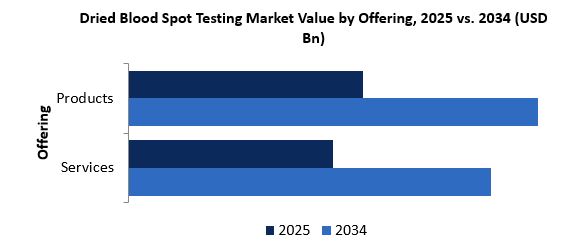
Global Dried Blood Spot Testing Market size was valued at USD 1.12 billion in 2025, and total revenue is expected to grow at a CAGR of 8.4% from 2025 to 2034, reaching nearly USD 2.31 Billion.Dried Blood Spot Testing Market
Dried blood spot (DBS) testing is a minimally invasive sampling and analysis approach in which a few drops of capillary blood are collected on filter paper or a microsampling device, dried, and sent to a laboratory for analysis. The Dried Blood Spot Testing Market is advancing on the back of universal newborn screening programmes, decentralised and home-based blood collection, the spread of volumetric microsampling, and the use of LC-MS/MS, immunoassay and molecular platforms on dried samples. DBS samples are shipped at ambient temperature, which lowers logistics costs and broadens access for remote, outreach, and clinical trial populations, supporting Dried Blood Spot Testing Market growth.
According to the U.S. Centers for Disease Control and Prevention (CDC), every U.S. state runs a public health newborn screening programme in which a heel-prick blood sample is blotted onto a filter paper card and analysed by the state laboratory. The CDC's National Center for Health Statistics reported 3,606,400 U.S. births in 2025, the population base for this screening. WHO consolidated hepatitis guidance includes dried blood spot samples among its recommended testing tools, which extends DBS use well beyond newborns.
The report is designed to help stakeholders identify attractive DBS testing applications, evaluate regional demand, understand competitive positioning, assess technology developments, and examine opportunities arising from newborn screening panel expansion, at-home DBS self-collection kits, and infectious-disease and therapeutic drug monitoring (TDM) programmes. Its coverage includes market forecasts through 2034, detailed segment analysis, company benchmarking, financial and strategic assessment, and an evaluation of the DBS collection, testing and laboratory-services ecosystem.
Why This SMR Report?
The SMR report on the Global Dried Blood Spot Testing Market has been prepared to give decision-makers a clear and dependable view of where demand is forming and how competitors are positioned. The report helps stakeholders identify attractive DBS testing applications, evaluate regional demand, understand competitive positioning, assess technology developments, and examine the opportunities arising from newborn screening panel expansion, at-home DBS self-collection kits, and infectious-disease and therapeutic drug monitoring (TDM) programmes. It provides market forecasts through 2034, detailed segment analysis, company benchmarking, financial and strategic assessment, and an evaluation of the DBS collection, testing and laboratory-services ecosystem.
Key Global Dried Blood Spot Testing Market Insights
- Newborn Screening Scale: The CDC reports that state laboratories screen virtually all babies born in the United States using heel-prick dried blood spots. Newborn screening remains the anchor application of the Dried Blood Spot Testing Market.
- Expanding Recommended Uniform Screening Panel (RUSP): On 16 December 2025, the U.S. HHS Secretary approved adding Duchenne muscular dystrophy (DMD) and metachromatic leukodystrophy (MLD) to the RUSP, as set out in a Health Resources and Services Administration (HRSA) notice in the Federal Register of 22 December 2025. Panel additions create demand for new DBS assays, instruments and confirmatory testing.
- Quality-Assurance Infrastructure: The CDC's Newborn Screening Quality Assurance Program, established in 1978, produces nearly one million dried blood spot reference specimens each year and supplies them to U.S. laboratories and laboratories in 88 countries, underpinning global confidence in DBS results.
- Viral Hepatitis Testing Gap: The WHO Global Hepatitis, in 2026, 287 million people will be living with chronic hepatitis B or C in 2024, 1.34 million deaths and about 1.8 million new infections a year. WHO consolidated guidance on hepatitis B and C testing includes dried blood spot samples, supporting decentralised screening.
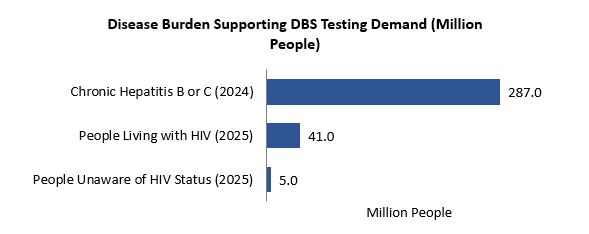
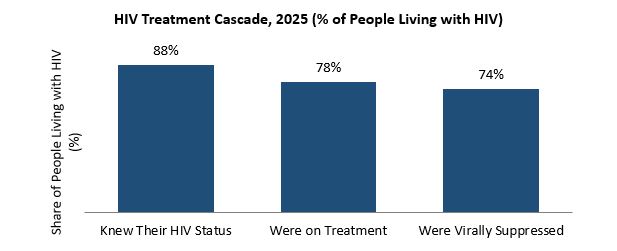
- HIV Monitoring and Early Infant Diagnosis: UNAIDS reported 41.0 million people living with HIV in 2025, of whom 88% knew their status, 78% were on treatment and 74% were virally suppressed. DBS-based viral load and early infant diagnosis (EID) extend testing to remote settings. EID reaching 74% of exposed infants in Eastern and Southern Africa versus 31% in Western and Central Africa.
- Moving Beyond Metabolic Disorders: On 24 September 2026, Revvity launched the CE-IVDR-certified GSP T1D 3plex kit, which uses capillary dried blood spots to screen children for type 1 diabetes autoantibodies. On 2 June 2026, Alamar Biosciences launched an extraction kit enabling NULISA proteomics on DBS microsamples collected at home.
Global Dried Blood Spot Testing Market Trends
- Rise of Volumetric Microsampling: Volumetric absorptive microsampling (VAMS) and metered-volume devices such as Trajan's Mitra and hemaPEN, Capitainer qDBS and Tasso's Tile-T20 cartridge address the haematocrit-driven volume variability of conventional spots, improving quantitative accuracy for TDM, bioanalysis and clinical trials.
- Home-Based and Self-Collection DBS Kits: Remote sampling lets patients and trial participants collect capillary blood at home and return it by post. Company reports describe dried samples as ambient-shippable, which removes cold-chain requirements and scheduled phlebotomy visits.
- Multiplex LC-MS/MS and Expanded Newborn Panels: Tandem mass spectrometry allows multi-analyte screening of amino acids and acylcarnitines from a single spot, while molecular and immunoassay modules add conditions such as SCID and SMA, supporting broader newborn screening panels.
- DBS-Based Autoimmunity, Proteomics and Genomic Testing: New kits are extending DBS beyond metabolic screening into type 1 diabetes autoantibody screening, multiplex proteomics and genome-wide expression profiling from a few microlitres of dried blood.
- Automation, Traceability and Digital Workflows: Automated punching, sample-preparation systems, barcoded cards and laboratory information integration are standardising DBS pre-analytics and reducing sample-quality errors in high-throughput newborn screening laboratories.
- Anti-Doping and Decentralised Clinical Trials: Tasso and InnoVero announced anti-doping blood collection solutions for the 2026 Olympic Winter Games, and Tasso's next-generation DBS system targets clinical trials where site access limits recruitment and retention.
-
Competitive Benchmarking of Volumetric Dried Blood Spot (DBS) Microsampling Devices
Device
Company
Role in the Market
Regulatory / Application Note
Mitra
Trajan Scientific and Medical (Neoteryx)
Volumetric microsampling device that addresses haematocrit-driven volume variability
Obtained IVDR-related clearance or certification for clinical use; compatible with the Alamar NULISA extraction kit
hemaPEN
Trajan Scientific and Medical (Neoteryx)
Metered-volume device for quantitative accuracy in TDM, bioanalysis and clinical trials
Listed with the FDA as a Class I device for therapeutic and IVD use; IVDR-related clearance or certification
Capitainer qDBS
Capitainer AB
Metered-volume card designed to remove the haematocrit effect on sub-punch volume
Compatible with the Alamar NULISA extraction kit
Tile-T20 cartridge
Tasso, Inc.
Volumetric capillary collection cartridge supporting decentralised sampling
Tasso’s next-generation DBS system targets clinical trials; Tasso and InnoVero announced anti-doping collection solutions for the 2026 Olympic Winter Games
Global Dried Blood Spot Testing Market Dynamics
Drivers
Government-Backed Newborn Screening Programmes: Public programmes in the United States, the United Kingdom and China rely on DBS. The NHS England programme screens for ten conditions with 98% coverage reported for quarter two of 2025/26, and China's National Health Commission reported newborn disease screening rates above 98% nationwide in 2023, with 259 dedicated screening centres.
Expansion of Screening Panels and New Therapies: Additions such as DMD and MLD to the U.S. RUSP, and the planned NHS England large-scale in-service evaluation of SMA screening, widen the testable condition set and increase assay, instrument and service demand.
Decentralised Infectious-Disease Testing: Health systems need low-cost sampling that reaches rural and key populations. WHO guidance supports DBS for hepatitis testing.
Growth of Pharmaceutical Bioanalysis and TDM: Pharmaceutical developers and CROs use DBS and VAMS to reduce blood volume, support paediatric and preclinical studies, and enable remote pharmacokinetic sampling. Newborn screening coverage in the two programmes quoted in the report is already high, which shows how embedded DBS is in public health systems.
Global Dried Blood Spot Testing Market Restraints
Haematocrit Effect and Pre-Analytical Variability: Spot size, blood volume and haematocrit influence analyte measurement from sub-punches. The metered-volume cards are designed to remove the haematocrit effect on sub-punch volume, which highlights how significant the issue is for conventional cards.
Lower Analytical Sensitivity for Some Assays: Reviews hosted by the U.S. National Library of Medicine note that HIV RNA testing on DBS is less sensitive than plasma testing because of the small input volume and dilution in elution buffer, which limits use cases without careful validation.
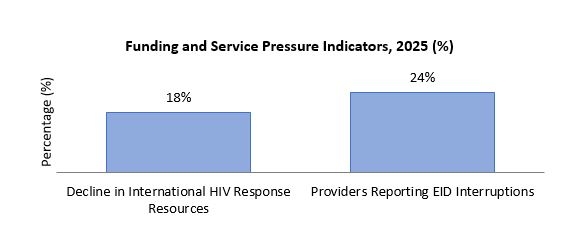
Funding Pressure on Public Health Programmes: UNAIDS reports an 18% decline in international HIV response resources in 2025 and that 24% of surveyed providers in eastern and southern Africa reported interruptions in early infant diagnosis between January and July 2025, a risk for DBS-based programmes in low- and middle-income countries.
Global Dried Blood Spot Testing Market Opportunities
Home Collection and Telehealth Integration: Self-collection kits linked to telehealth and decentralised trials open consumer, employer and public health channels beyond hospital-based sampling.
New Newborn and Early-Childhood Screening Conditions: Recently recommended conditions and early-childhood screening, such as type 1 diabetes autoantibody screening on DBS, create new assay and laboratory-service revenue pools.
Hepatitis and HIV Elimination Programmes: WHO's 2030 hepatitis elimination goal and UNAIDS 95-95-95 targets sustain demand for simplified, decentralised testing including DBS-based viral load and diagnosis.
Multi-Omics on Dried Samples: Proteomics, metabolomics and sequencing workflows validated on dried microsamples allow biobank, population-health and longitudinal-study applications.
Global Dried Blood Spot Testing Market Challenges
Device and Method Standardisation: Different cards, microsampling tips and extraction chemistries yield different recoveries, hamper Dried Blood Spot Testing Market Growth.
Regulatory and Reimbursement Complexity: Devices and kits require clearance or certification under frameworks such as the U.S. FDA and EU IVDR. Trajan's hemaPEN is listed with the FDA as a Class I device for therapeutic and IVD use, and Revvity's T1D kit is CE-IVDR certified, but approvals vary by market.
Sample Quality and Storage Control: Mailed samples need protection from humidity and contamination. CDC guidance for DBS receipt and storage emphasises inspection of spot quality and humidity exposure, adding procedural overhead for laboratories.
Global Dried Blood Spot Testing Market Segment Analysis
By Offering: DBS testing reagents and assay kits, together with laboratory services, held the leading share of the Global Dried Blood Spot Testing Market in 2025 because every spot requires consumables and analysis. DBS collection products include collection cards and filter papers, collection kits, microsampling devices, and lancets and accessories.
DBS testing instruments and equipment cover mass spectrometry, chromatography, immunoassay, molecular diagnostics, and automated sample-preparation systems. Services include clinical diagnostics, newborn screening, therapeutic drug monitoring, toxicology, and research and bioanalytical testing.
Offering-Wise Analysis, Key Components and Market Positioning (2025)
|
Offering |
Components |
Market Role |
|
Testing Reagents and Assay Kits |
Consumables required for every spot analyzed |
Held the leading share in 2025, together with laboratory services |
|
Collection Products |
Collection cards and filter papers, collection kits, microsampling devices, lancets and accessories |
Entry point of every DBS workflow |
|
Instruments and Equipment |
Mass spectrometry, chromatography, immunoassay, molecular diagnostic and automated sample-preparation systems |
Platform base for newborn screening and bioanalysis laboratories |
|
Services |
Clinical diagnostic, newborn screening, TDM, toxicology, and research and bioanalytical testing services |
Held the leading share in 2025, together with reagents and assay kits |
By Testing Technology: Mass spectrometry-based testing, led by tandem MS and LC-MS/MS, dominated in 2025 because it enables multiplex screening of metabolic analytes in newborn programmes and quantitative TDM and bioanalysis. Chromatography-based testing without MS includes liquid and gas chromatography. Immunoassay-based testing, including ELISA and chemiluminescence, supports hormone, infectious-disease and autoantibody applications. Molecular diagnostic testing, including PCR and sequencing, supports HIV viral load, hepatitis and genetic screening.
Technology-Wise Comparison of Analytical Methods, Testing Parameters and Diagnostic Applications (2025)
|
Testing Technology |
Methods |
Technical Parameters |
Primary Applications |
||
|
Mass Spectrometry-Based Testing |
Tandem MS/MS, LC-MS/MS |
20–50+ analytes per multiplex screening panel; 3.2 mm standard DBS punch diameter; 1–10 minutes per sample for selected automated methods |
Newborn screening, metabolic disorders, therapeutic drug monitoring |
||
|
Chromatography-Based Testing |
HPLC, GC |
5–30 minutes per analytical run; 10–30 µL sample volume for selected microsampling workflows |
Pharmaceutical analysis, metabolic profiling, biomarker testing |
||
|
Immunoassay-Based Testing |
ELISA, CLIA |
1–4 hours per ELISA batch; 15–60 minutes for selected automated immunoassays; 96 wells per standard microplate |
Hormone testing, infectious diseases, autoantibody detection |
||
|
Molecular Diagnostic Testing |
PCR, qPCR, NGS |
35–45 PCR cycles; 1–2 hours for PCR amplification; 24–48 hours for selected sequencing workflows |
HIV monitoring, hepatitis screening, genetic disorder detection |
||
By Analyte Type: Small-molecule metabolites, such as amino acids and acylcarnitines used in newborn metabolic screening, held the largest Global Dried Blood Spot Testing Market Share in 2025. Proteins and peptides, nucleic acids (DNA and RNA), therapeutic drugs and pharmaceutical compounds, toxicants and drugs of abuse, and vitamins and micronutrients address immunology, infectious-disease, TDM, forensic and nutrition use cases.
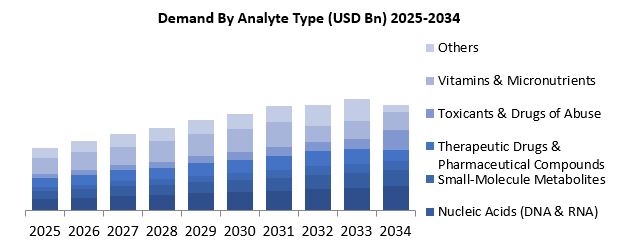
The Global Dried Blood Spot Testing Market includes multiple analyte types, including metabolites, proteins, nucleic acids, therapeutic drugs, toxicants, and micronutrients. Small-molecule metabolites dominated in 2025, supported by newborn screening programs, while molecular diagnostics and proteomics expanded clinical applications.
Analyte-Wise Classification, Key Biomarkers and Clinical Diagnostic Applications (2025)
|
Analyte Type |
Examples |
Use Case |
|
Small-Molecule Metabolites |
Amino acids and acylcarnitines |
Newborn metabolic screening; largest share in 2025 |
|
Proteins and Peptides |
Autoantibodies and proteomic markers |
Immunology and proteomics |
|
Nucleic Acids |
DNA and RNA |
Infectious-disease and genetic testing |
|
Therapeutic Drugs and Pharmaceutical Compounds |
Drug concentrations in microsamples |
Therapeutic drug monitoring and bioanalysis |
|
Toxicants and Drugs of Abuse |
Forensic and toxicology panels |
Forensic use |
|
Vitamins and Micronutrients |
Nutritional markers |
Nutrition assessment |
Global Dried Blood Spot Testing Market Regional Insights
North America dominated the Global Dried Blood Spot Testing Market in 2025, supported by mandatory state newborn screening programmes, the CDC's quality-assurance programme, and a large TDM and clinical-research base. HHS added DMD and MLD to the RUSP in December 2025, and states now decide when to implement screening, which creates a pipeline of assay and laboratory-capacity upgrades. Canada and Mexico offer additional demand through provincial and national programmes and clinical-research outsourcing.
Europe represents an important market due to national screening programmes and the EU In Vitro Diagnostic Regulation (IVDR). The NHS England newborn blood spot programme screens for ten conditions, and the UK Government reported 98% coverage in quarter two of 2025/26. NHS England is planning a large-scale in-service evaluation of SMA screening. Trajan's Mitra and hemaPEN devices and Revvity's T1D 3plex kit have obtained IVDR-related clearance or certification for clinical use. Germany, the United Kingdom, France, Italy, Spain, the Netherlands, Sweden, Norway and Denmark are among the countries assessed.
Asia Pacific is expected to be a major growth opportunity owing to large birth cohorts, expanding screening programmes and a high viral hepatitis burden. China's National Health Commission reported newborn disease screening rates above 98% nationwide in 2023 and 259 newborn disease screening centres. India is among the countries with the highest hepatitis-related death burden in WHO's 2026 Global Hepatitis Report, which highlights the need for scalable testing. Japan, South Korea, Australia, Singapore, Thailand, Indonesia, Vietnam and Malaysia provide additional opportunities.
South America, the Middle East & Africa offer opportunities in HIV early infant diagnosis, viral hepatitis testing and newborn screening expansion. Western and Central Africa, and the WHO African Region, account for a large share of new hepatitis B infections. Donor funding disruptions remain a risk, but DBS logistics suit decentralised national programmes.
Regional Demand Drivers, Key Market Indicators and Growth Outlook (2025–2034)
|
Region |
Primary Demand Anchor |
Key Data Points |
Outlook |
|
North America |
Mandatory state newborn screening; TDM and clinical research |
U.S. births (2025); DMD and MLD added to RUSP |
Market leader in 2025; assay and capacity upgrades ahead |
|
Europe |
National screening programmes; EU IVDR |
Ten conditions screened by NHS England; 98% coverage (Q2 2025/26) |
Important market; SMA screening evaluation planned |
Global Dried Blood Spot Testing Market Competitive Landscape
The competitive landscape includes life-science and diagnostics majors, mass spectrometry and chromatography instrument manufacturers, specialised DBS collection and microsampling companies, filter-paper manufacturers, reagent and assay developers, and reference and newborn-screening laboratory service providers. Global Dried Blood Spot Testing Market Competition is influenced by assay breadth, platform throughput, regulatory approvals, volumetric accuracy, ease of self-collection, quality-control materials, pricing and laboratory partnerships.
Companies are focusing on volumetric and patient-centric collection devices, multiplex newborn screening platforms, IVDR and FDA compliance, automation, and partnerships across devices, extraction chemistries and analytical platforms. Examples from company disclosures include Revvity's GSP platform extending from newborn into early-childhood screening, Alamar's extraction kit designed for samples collected on Capitainer, Telimmune, Mitra and Tasso devices, and Trajan's regulatory milestones for Mitra and hemaPEN.
The report evaluates market concentration, company positioning, DBS-related product portfolios, revenue contribution, R&D investment, profitability, geographical presence, distribution networks, certifications and recent strategic developments. Company-level DBS revenue and market share are distinguished from broader diagnostics and life-science revenue wherever separate disclosure is available.
Dried Blood Spot Testing Market Recent Developments
|
Date |
Company |
Recent Developments |
|
24 September 2026 |
Revvity, Inc. (United States) |
Revvity launched the GSP T1D 3plex kit, a fully automated, CE-IVDR-certified assay designed to detect three type 1 diabetes autoantibodies using capillary dried blood spots. The solution operates on the GSP screening platform and supports early childhood diabetes screening. |
|
4 February 2026 |
Tasso, Inc. (United States) |
Tasso and InnoVero announced their selection to supply DBS-based anti-doping blood collection solutions for the 2026 Olympic Winter Games. The system combines capillary blood collection with tamper-evident sample security. The companies reported distributing more than 80,000 collection kits since 2021. |
|
12 October 2026 |
Ahlstrom Oyj (Finland) |
Ahlstrom announced a collaboration with Hamilton AG to advance automated DBS sample processing. The initiative combines Ahlstrom's specimen collection materials with Hamilton's easyPunch STAR platform, supporting automated sample punching, improved traceability and high-throughput laboratory workflows. |
|
16 March 2026 |
Neoteryx / Trajan Scientific and Medical (United States) |
Trajan and IQVIA highlighted the application of blood microsampling technologies in patient-centric clinical trials. The initiative focused on decentralized clinical research, remote sample collection and reducing dependence on conventional venous blood sampling. |
|
3 February 2026 |
Neoteryx / Trajan Scientific and Medical (United States) |
Neoteryx introduced Spanish- and Arabic-language instructional videos for its Mitra VAMS microsampling devices. The initiative supports standardized blood sample collection across multilingual populations, clinical research programs and home-based diagnostic settings. |
Global Dried Blood Spot Testing Market Scope
|
Global Dried Blood Spot Testing Market |
|||
|
Report Coverage |
Details |
||
|
Base Year: |
2025 |
Forecast Period: |
2026-2034 |
|
Historical Data: |
2020 to 2025 |
Market Size in 2025: |
USD 1.12 Billion |
|
Forecast Period 2026 to 2034 CAGR: |
8.4% |
Market Size in 2034: |
USD 2.31 Billion |
|
Dried Blood Spot Testing Segment Analysis |
By Offering |
Products DBS Collection Products DBS Collection Cards & Filter Papers DBS Collection Kits DBS Microsampling Devices Lancets & Blood Collection Accessories Others DBS Testing Instruments & Equipment Mass Spectrometry Instruments Chromatography Instruments Immunoassay Analyzers Molecular Diagnostic Instruments Automated DBS Sample Preparation Systems Others DBS Testing Reagents & Assay Kits Immunoassay Reagents & Kits Molecular Diagnostic Reagents & Kits Mass Spectrometry & Chromatography Reagents Sample Preparation & Extraction Reagents Quality Control Materials & Calibration Standards Others Services Clinical Diagnostic Testing Services Newborn Screening Services Therapeutic Drug Monitoring Services Toxicology Testing Services Research & Bioanalytical Testing Services Others |
|
|
By Testing Technology |
Mass Spectrometry-Based Testing Tandem Mass Spectrometry (MS/MS) LC-MS/MS Other Mass Spectrometry Methods Chromatography-Based Testing (Without MS) Liquid Chromatography Gas Chromatography Immunoassay-Based Testing ELISA Chemiluminescence Immunoassays Other Immunoassays Molecular Diagnostic Testing PCR-Based Testing Sequencing-Based Testing Other Molecular Methods Others |
||
|
By Analyte Type |
Proteins & Peptides Nucleic Acids (DNA & RNA) Small-Molecule Metabolites Therapeutic Drugs & Pharmaceutical Compounds Toxicants & Drugs of Abuse Vitamins & Micronutrients Others |
||
|
By Sample Collection Method |
Conventional Finger-Prick DBS Collection Conventional Heel-Prick DBS Collection Volumetric DBS Microsampling Venous Blood Applied to DBS Media Others |
||
|
By Testing Application |
Newborn Screening Inherited Metabolic Disorders Endocrine Disorders Hemoglobinopathies Other Newborn Screening Conditions Infectious Disease Testing HIV Testing Hepatitis B & C Testing Other Infectious Diseases Therapeutic Drug Monitoring Toxicology & Drugs of Abuse Testing Nutritional & Metabolic Assessment Genetic & Molecular Testing Clinical Research & Pharmaceutical Development Others |
||
|
By Sample Collection Setting |
Hospital & Clinic-Based Collection Diagnostic Laboratory-Based Collection Community & Outreach-Based Collection Home-Based / Self-Collection Others |
||
|
By End-User |
Hospitals & Clinical Laboratories Newborn Screening Laboratories & Public Health Programs Independent Diagnostic Laboratories Pharmaceutical & Biotechnology Companies Contract Research Organizations (CROs) Academic & Research Institutions Others |
||
Key Players / Competitor Profiles Covered in the Dried Blood Spot Testing Market Report from a Strategic Perspective
North America
1. Revvity, Inc. (United States)
2. Thermo Fisher Scientific Inc. (United States)
3. Bio-Rad Laboratories, Inc. (United States)
4. Abbott Laboratories (United States)
5. Agilent Technologies, Inc. (United States)
6. Becton, Dickinson and Company (United States)
7. Neoteryx, LLC (United States)
8. Tasso, Inc. (United States)
9. Spot On Sciences, Inc. (United States)
10. Eastern Business Forms, Inc. (United States)
11. Salimetrics, LLC (United States)
12. Sedia Biosciences Corporation (United States)
13. Baebies, Inc. (United States)
14. Metabolon, Inc. (United States)
15. Gentegra LLC (United States)
16. US BioTek Laboratories, LLC (United States)
17. AssayPro LLC (United States)
18. LaCAR MDx Technologies Inc. (Canada)
Europe
19. Ahlstrom Oyj (Finland)
20. QIAGEN N.V. (Netherlands)
21. F. Hoffmann-La Roche Ltd. (Switzerland)
22. CENTOGENE GmbH (Germany)
23. ARCHIMEDlife GmbH (Austria)
24. Capitainer AB (Sweden)
25. HemaXis SA (Switzerland)
26. DBS System SA (Switzerland)
27. Eurofins Scientific SE (Luxembourg)
28. LGC Limited (United Kingdom)
29. Greiner Bio-One International GmbH (Austria)
30. Chromsystems Instruments & Chemicals GmbH (Germany)
31. Tecan Group Ltd. (Switzerland)
32. RDA Spot (Lithuania)
33. Merck KGaA (Germany)
34. Siemens Healthineers AG (Germany)
35. Grifols, S.A. (Spain)
Asia Pacific
36. Shimadzu Corporation (Japan)
37. Sysmex Corporation (Japan)
38. Trajan Scientific and Medical Pty Ltd. (Australia)
39. Trivitron Healthcare Pvt. Ltd. (India)
40. Span Biotech Ltd. (India)
41. Lipomic Healthcare Pvt. Ltd. (India)
42. SNBL Ltd. (Japan)
43. Nipro Corporation (Japan)
44. Sekisui Medical Co., Ltd. (Japan)
45. Tosoh Corporation (Japan)
46. ARKRAY, Inc. (Japan)
47. Fujirebio Holdings, Inc. (Japan)
48. BGI Genomics Co., Ltd. (China)
Middle East & Africa
49. BioMérieux South Africa (Pty) Ltd. (South Africa)
50. Lancet Laboratories (South Africa)
Others
Frequently Asked Questions
Dried Blood Spot Testing Market Table of Contents
1. Global Dried Blood Spot Testing Market Overview
1.1. Market Definition and Scope
1.2. Evolution of Dried Blood Spot Testing Technologies
1.3. Industry Structure and Diagnostic Testing Ecosystem
1.4. Key Stakeholders and Market Participants
1.5. Clinical and Research Applications of DBS Testing
1.6. Emerging Trends in Minimally Invasive Blood Sampling
2. Global Dried Blood Spot Testing Market Dynamics
2.1. Market Growth Drivers
2.2. Market Restraints
2.3. Market Opportunities
2.4. Market Challenges
2.5. Emerging Industry Trends
2.6. Impact of Technological Advancements on Market Development
3. Global Dried Blood Spot Testing Market Value Chain and Supply Chain Analysis
3.1. DBS Collection Materials and Raw Material Suppliers
3.2. DBS Collection Device Manufacturing Ecosystem
3.3. Laboratory Testing and Sample Processing Infrastructure
3.4. Distribution Networks and Diagnostic Service Providers
3.5. Supply Chain Risks and Operational Challenges
3.6. Value Chain Optimization and Commercialization Opportunities
4. Global Dried Blood Spot Testing Market Technology Landscape and Innovation Assessment
4.1. Advancements in Automated DBS Sample Processing
4.2. Integration of LC-MS/MS in High-Throughput Testing
4.3. Development of Quantitative Microsampling Technologies
4.4. Molecular Diagnostics and Advanced Analytical Platforms
4.5. Innovations in Sample Stability and Storage Technologies
4.6. Future Technology Development and Commercialization Opportunities
5. Global Dried Blood Spot Testing Market Clinical Applications and Diagnostic Adoption Assessment
5.1. Clinical Adoption Across Diagnostic Specialties
5.2. Expansion of DBS Testing in Preventive Healthcare
5.3. Applications in Chronic Disease Monitoring
5.4. Infectious Disease Surveillance and Screening Programs
5.5. Pediatric and Geriatric Diagnostic Applications
5.6. Emerging Applications in Personalized Medicine
6. Global Dried Blood Spot Testing Market Newborn Screening and Public Health Program Assessment
6.1. Expansion of National Newborn Screening Programs
6.2. Inherited Metabolic Disorder Screening
6.3. Endocrine Disorder and Hemoglobinopathy Detection
6.4. Government Funding and Screening Infrastructure
6.5. Population-Level Testing and Early Disease Detection
6.6. Newborn Screening Opportunities in Emerging Economies
7. Global Dried Blood Spot Testing Market Regulatory Framework and Quality Assurance Assessment
7.1. FDA Regulatory Requirements for DBS Testing Products
7.2. European IVDR Compliance and Diagnostic Certification
7.3. Clinical Laboratory Accreditation and Testing Standards
7.4. Analytical Validation and Quality Control Requirements
7.5. Reimbursement Policies and Healthcare Coverage
7.6. Regulatory Challenges and Market Entry Requirements
8. Global Dried Blood Spot Testing Market Cost Structure, Pricing and Commercialization Analysis
8.1. DBS Collection Product Manufacturing Costs
8.2. Laboratory Testing and Sample Processing Costs
8.3. Pricing Models for DBS Diagnostic Testing Services
8.4. Cost Comparison With Conventional Blood Sampling
8.5. Laboratory Automation and Operational Efficiency
8.6. Profitability and Commercialization Opportunities
9. Global Dried Blood Spot Testing Market Segmentation Analysis
9.1. By Offering
9.1.1. Products
9.1.1.1. DBS Collection Products
9.1.1.1.1. DBS Collection Cards & Filter Papers
9.1.1.1.2. DBS Collection Kits
9.1.1.1.3. DBS Microsampling Devices
9.1.1.1.4. Lancets & Blood Collection Accessories
9.1.1.1.5. Others
9.1.1.2. DBS Testing Instruments & Equipment
9.1.1.2.1. Mass Spectrometry Instruments
9.1.1.2.2. Chromatography Instruments
9.1.1.2.3. Immunoassay Analyzers
9.1.1.2.4. Molecular Diagnostic Instruments
9.1.1.2.5. Automated DBS Sample Preparation Systems
9.1.1.2.6. Others
9.1.1.3. DBS Testing Reagents & Assay Kits
9.1.1.3.1. Immunoassay Reagents & Kits
9.1.1.3.2. Molecular Diagnostic Reagents & Kits
9.1.1.3.3. Mass Spectrometry & Chromatography Reagents
9.1.1.3.4. Sample Preparation & Extraction Reagents
9.1.1.3.5. Quality Control Materials & Calibration Standards
9.1.1.3.6. Others
9.1.2. Services
9.1.2.1. Clinical Diagnostic Testing Services
9.1.2.2. Newborn Screening Services
9.1.2.3. Therapeutic Drug Monitoring Services
9.1.2.4. Toxicology Testing Services
9.1.2.5. Research & Bioanalytical Testing Services
9.1.2.6. Others
9.2. By Testing Technology
9.2.1. Mass Spectrometry-Based Testing
9.2.1.1. Tandem Mass Spectrometry (MS/MS)
9.2.1.2. LC-MS/MS
9.2.1.3. Other Mass Spectrometry Methods
9.2.2. Chromatography-Based Testing (Without MS)
9.2.2.1. Liquid Chromatography
9.2.2.2. Gas Chromatography
9.2.3. Immunoassay-Based Testing
9.2.3.1. ELISA
9.2.3.2. Chemiluminescence Immunoassays
9.2.3.3. Other Immunoassays
9.2.4. Molecular Diagnostic Testing
9.2.4.1. PCR-Based Testing
9.2.4.2. Sequencing-Based Testing
9.2.4.3. Other Molecular Methods
9.2.5. Others
9.3. By Analyte Type
9.3.1. Proteins & Peptides
9.3.2. Nucleic Acids (DNA & RNA)
9.3.3. Small-Molecule Metabolites
9.3.4. Therapeutic Drugs & Pharmaceutical Compounds
9.3.5. Toxicants & Drugs of Abuse
9.3.6. Vitamins & Micronutrients
9.3.7. Others
9.4. By Sample Collection Method
9.4.1. Conventional Finger-Prick DBS Collection
9.4.2. Conventional Heel-Prick DBS Collection
9.4.3. Volumetric DBS Microsampling
9.4.4. Venous Blood Applied to DBS Media
9.4.5. Others
9.5. By Testing Application
9.5.1. Newborn Screening
9.5.1.1. Inherited Metabolic Disorders
9.5.1.2. Endocrine Disorders
9.5.1.3. Hemoglobinopathies
9.5.1.4. Other Newborn Screening Conditions
9.5.2. Infectious Disease Testing
9.5.2.1. HIV Testing
9.5.2.2. Hepatitis B & C Testing
9.5.2.3. Other Infectious Diseases
9.5.3. Therapeutic Drug Monitoring
9.5.4. Toxicology & Drugs of Abuse Testing
9.5.5. Nutritional & Metabolic Assessment
9.5.6. Genetic & Molecular Testing
9.5.7. Clinical Research & Pharmaceutical Development
9.5.8. Others
9.6. By Sample Collection Setting
9.6.1. Hospital & Clinic-Based Collection
9.6.2. Diagnostic Laboratory-Based Collection
9.6.3. Community & Outreach-Based Collection
9.6.4. Home-Based / Self-Collection
9.6.5. Others
9.7. By End User
9.7.1. Hospitals & Clinical Laboratories
9.7.2. Newborn Screening Laboratories & Public Health Programs
9.7.3. Independent Diagnostic Laboratories
9.7.4. Pharmaceutical & Biotechnology Companies
9.7.5. Contract Research Organizations (CROs)
9.7.6. Academic & Research Institutions
9.7.7. Others
10. Global Dried Blood Spot Testing Market Regional Analysis
10.1. North America
10.1.1. United States
10.1.2. Canada
10.1.3. Mexico
10.2. Europe
10.2.1. Germany
10.2.2. France
10.2.3. United Kingdom
10.2.4. Italy
10.2.5. Spain
10.2.6. Poland
10.2.7. Belgium
10.2.8. Netherlands
10.2.9. Rest of Europe
10.3. Asia Pacific
10.3.1. China
10.3.2. India
10.3.3. Japan
10.3.4. South Korea
10.3.5. Australia
10.3.6. Indonesia
10.3.7. Malaysia
10.3.8. Rest of Asia Pacific
10.4. South America
10.4.1. Brazil
10.4.2. Argentina
10.4.3. Colombia
10.4.4. Chile
10.4.5. Rest of South America
10.5. Middle East and Africa
10.5.1. Saudi Arabia
10.5.2. United Arab Emirates
10.5.3. Egypt
10.5.4. South Africa
10.5.5. Nigeria
10.5.6. Rest of Middle East and Africa
11. Global Dried Blood Spot Testing Market Home-Based Collection and Remote Diagnostic Adoption Assessment
11.1. Adoption of Home-Based DBS Collection and Self-Sampling Kits
11.2. Integration of DBS Testing with Telehealth Platforms
11.3. Remote Patient Monitoring and Chronic Disease Management
11.4. Direct-to-Consumer Diagnostic Testing Business Models
11.5. Patient Convenience, Accessibility and Testing Compliance
11.6. Commercial Opportunities in Decentralized Diagnostic Services
12. Global Dried Blood Spot Testing Market Pharmaceutical Clinical Trials and CRO Adoption Assessment
12.1. DBS Applications in Pharmaceutical Clinical Development
12.2. Pharmacokinetic and Pharmacodynamic Testing Applications
12.3. Bioavailability and Bioequivalence Testing Opportunities
12.4. CRO Capabilities and Outsourced Bioanalytical Services
12.5. Remote Sample Collection in Decentralized Clinical Trials
12.6. Emerging Opportunities in Patient-Centric Clinical Research
13. Global Dried Blood Spot Testing Market Investment Landscape and Strategic Commercialization Opportunities
13.1. Investment Trends in DBS Diagnostics and Microsampling
13.2. Venture Capital Funding and Emerging Diagnostic Startups
13.3. Strategic Partnerships and Technology Collaborations
13.4. Mergers, Acquisitions and Industry Consolidation
13.5. International Market Expansion and Product Commercialization
13.6. High-Potential Investment Opportunities Across the DBS Ecosystem
14. Global Dried Blood Spot Testing Market Competitive Landscape and Strategic Industry Outlook
14.1. Competitive Structure and Leading Market Participants
14.2. DBS Collection Product and Testing Service Provider Benchmarking
14.3. Company-Wise Market Share and Revenue Positioning
14.4. Product Portfolio and Technological Capability Comparison
14.5. Competitive Strategies and Regional Expansion Initiatives
14.6. Strategic Recommendations and Market Outlook Through 2034
15. Global Dried Blood Spot Testing Market Demand Forecast and Diagnostic Testing Volume Assessment
15.1. Historical DBS Testing Demand and Utilization Trends
15.2. Annual DBS Testing Volume Across Clinical Applications
15.3. Newborn Screening Test Volume and Demand Forecast
15.4. Infectious Disease and Therapeutic Monitoring Test Demand
15.5. Regional Testing Volume Growth and Demand Distribution
15.6. Long-Term DBS Testing Demand Forecast Through 2034
16. Global Dried Blood Spot Testing Market Product Pricing and Average Selling Price Analysis
16.1. DBS Collection Card and Filter Paper Pricing
16.2. Microsampling Device and Collection Kit Pricing
16.3. Testing Instrument and Equipment Pricing Assessment
16.4. Reagents and Assay Kit Average Selling Prices
16.5. Laboratory Testing Service Pricing by Application
16.6. Regional Pricing Variations and Future ASP Trends
17. Global Dried Blood Spot Testing Market Laboratory Automation and Operational Efficiency Benchmarking
17.1. Automated DBS Punching and Sample Extraction Systems
17.2. High-Throughput Laboratory Processing Capabilities
17.3. Laboratory Workflow Integration and Digitalization
17.4. Sample Processing Time and Operational Efficiency
17.5. Automation Investment and Return on Investment Assessment
17.6. Future Laboratory Automation and Capacity Expansion Opportunities
18. Global Dried Blood Spot Testing Market Sample Stability, Storage and Transportation Infrastructure Assessment
18.1. DBS Sample Stability Across Storage Conditions
18.2. Temperature and Humidity Effects on Sample Integrity
18.3. Sample Packaging and Transportation Requirements
18.4. Cross-Border DBS Sample Logistics and Compliance
18.5. Sample Tracking and Chain-of-Custody Management
18.6. Innovations in Long-Term Sample Preservation
19. Global Dried Blood Spot Testing Market Healthcare Provider Purchasing Behavior and Procurement Analysis
19.1. Hospital and Clinical Laboratory Purchasing Criteria
19.2. Public Health Screening Program Procurement Models
19.3. Diagnostic Laboratory Supplier Selection Factors
19.4. Pharmaceutical and CRO Procurement Requirements
19.5. Contract Pricing and Bulk Purchasing Practices
19.6. Supplier Qualification and Procurement Decision Framework
20. Global Dried Blood Spot Testing Market Patient Adoption, Awareness and Diagnostic Accessibility Assessment
20.1. Patient Awareness of DBS-Based Diagnostic Testing
20.2. Patient Preferences for Minimally Invasive Blood Collection
20.3. Accessibility of DBS Testing in Rural and Remote Areas
20.4. Barriers to Home-Based Sample Collection Adoption
20.5. Patient Compliance and Sample Collection Success Rates
20.6. Opportunities for Improving Diagnostic Accessibility
21. Global Dried Blood Spot Testing Market Infectious Disease Surveillance and Population Screening Opportunities
21.1. HIV Screening and Monitoring Applications
21.2. Hepatitis B and Hepatitis C Screening Programs
21.3. DBS Testing in Epidemiological Surveillance
21.4. Community-Based Infectious Disease Testing Initiatives
21.5. Public Health Partnerships and Screening Investments
21.6. Emerging Opportunities in Population-Level Diagnostics
22. Global Dried Blood Spot Testing Market Therapeutic Drug Monitoring and Precision Medicine Opportunities
22.1. Immunosuppressant Drug Monitoring Applications
22.2. Antiepileptic Drug Concentration Monitoring
22.3. DBS Testing in Personalized Drug Dosing
22.4. Pharmacogenomic Testing and Precision Medicine Integration
22.5. Remote Therapeutic Drug Monitoring Programs
22.6. Commercial Opportunities in Personalized Healthcare
23. Global Dried Blood Spot Testing Market Toxicology, Environmental Exposure and Occupational Health Applications
23.1. Drugs of Abuse Testing and Substance Exposure Monitoring
23.2. Environmental Contaminant and Chemical Exposure Assessment
23.3. Occupational Health Screening Applications
23.4. Forensic Toxicology and Analytical Testing Requirements
23.5. Regulatory and Quality Standards for Toxicology Testing
23.6. Emerging Commercial Opportunities in Exposure Monitoring
24. Global Dried Blood Spot Testing Market Nutritional Assessment and Metabolic Biomarker Testing Opportunities
24.1. Vitamin and Micronutrient Deficiency Testing
24.2. Metabolic Biomarker Analysis and Screening Applications
24.3. DBS Testing in Maternal and Pediatric Nutrition Programs
24.4. Nutritional Monitoring in Preventive Healthcare
24.5. Consumer Wellness and At-Home Nutritional Testing
24.6. Growth Opportunities in Personalized Nutrition Diagnostics
25. Global Dried Blood Spot Testing Market Distribution Channels and Commercial Partnership Assessment
25.1. Direct Sales to Hospitals and Diagnostic Laboratories
25.2. Distributor and Third-Party Supply Networks
25.3. Public Health and Government Procurement Channels
25.4. Pharmaceutical and CRO Supply Partnerships
25.5. Online Distribution of DBS Collection Products
25.6. Regional Distribution Expansion and Partnership Opportunities
26. Global Dried Blood Spot Testing Market Intellectual Property, Patent Landscape and Technology Licensing Assessment
26.1. DBS Collection Device Patent Landscape
26.2. Microsampling Technology Patent Developments
26.3. Intellectual Property Positioning of Leading Manufacturers
26.4. Technology Licensing and Commercial Collaboration Models
26.5. Patent Expiration and Competitive Entry Opportunities
26.6. Emerging Innovation Areas and Intellectual Property Risks
27. Global Dried Blood Spot Testing Market Emerging Economies and Untapped Regional Growth Opportunities
27.1. DBS Testing Adoption Across Emerging Healthcare Markets
27.2. Expansion of Newborn Screening in Developing Countries
27.3. Public Health Investments and Diagnostic Infrastructure Development
27.4. Affordable DBS Collection and Testing Solutions
27.5. Regional Market Entry Barriers and Commercial Opportunities
27.6. Strategic Growth Potential Across High-Priority Emerging Markets
28. Global Dried Blood Spot Testing Market Future Outlook, Strategic Growth Roadmap and Industry Recommendations
28.1. Global DBS Testing Industry Outlook Through 2034
28.2. Emerging Technologies and Future Diagnostic Applications
28.3. High-Growth Product and Service Opportunities
28.4. Regional Investment and Market Expansion Priorities
28.5. Strategic Recommendations for Manufacturers and Testing Providers
28.6. Long-Term Competitive Positioning and Industry Growth Roadmap
29. Company Profile: Key Players
-
-
- Company Overview
- Business Portfolio
- Financial Overview
- SWOT Analysis
- Strategic Analysis
- Recent Development
-
29.2. Page Industries Limited
29.3. Aditya Birla Fashion & Retail Limited
29.4. Welspun India Limited
29.5. Eclat Textile Co., Ltd.
29.6. Makalot Industrial Co., Ltd.
29.7. Crystal International Group Limited
29.8. TAL Apparel Ltd.
29.9. Apparel Group
29.10. Chalhoub Group
29.11. Azadea Group
29.12. Al Hokair Fashion Retail
29.13. LC Waikiki
29.14. Truworths International
29.15. Woolworths Holdings Limited
29.16. The Foschini Group (TFG)
29.17. Lojas Renner S.A.
29.18. Cia Hering
29.19. Riachuelo (Guararapes Confecções)
29.20. Grupo Malwee
29.21. Coltejer S.A.
29.22. Arturo Calle
29.23. Topitop
Others
- Key Findings
- Analyst Recommendations
- Market: Research Methodology