ENG
 Japanese
 French
 German
 Korean

Global Ataxia Market Size & Forecast
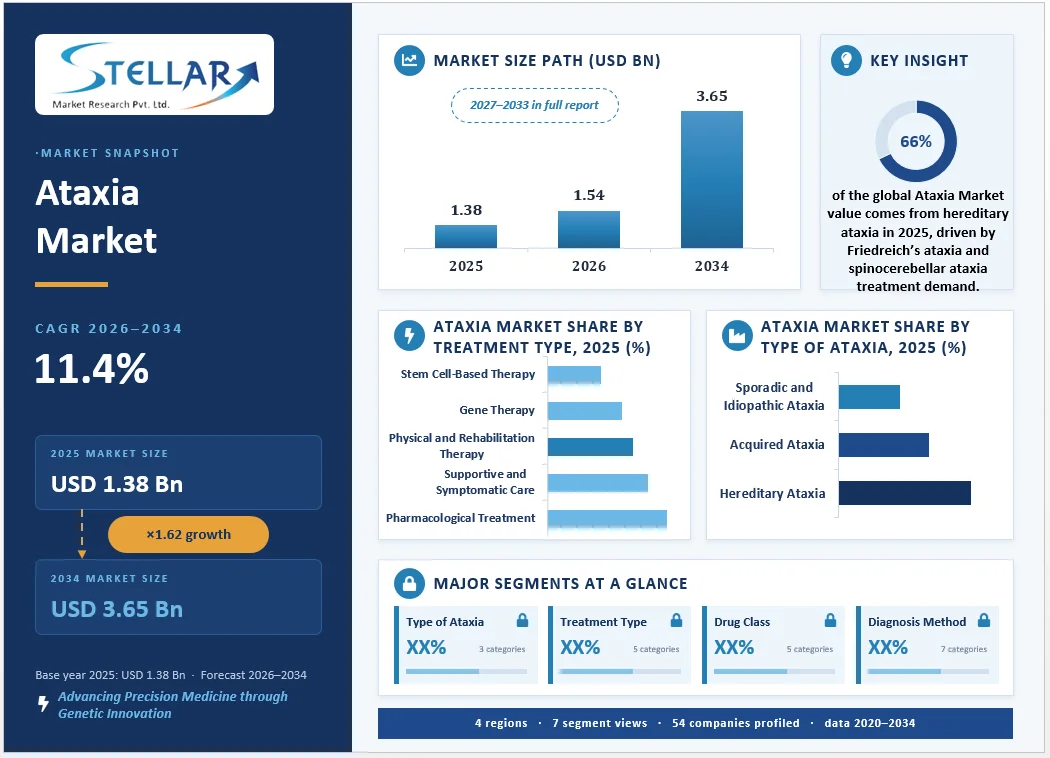
The Global Ataxia Market was valued at USD 1.38 billion in 2025 and is projected to reach USD 3.65 billion by 2034, growing at a CAGR of 11.4% during 2026–2034, according to Stellar Market Research (SMR).
The Global Ataxia Market was valued at USD 1.38 billion in 2025 and is projected to reach USD 3.65 billion by 2034, growing at a CAGR of 11.4% during 2026–2034, according to Stellar Market Research (SMR). Ataxia is a neurological condition and a group of disorders, defined by loss of voluntary muscle coordination, an unsteady gait, slurred speech and abnormal eye movements, most often caused by damage or degeneration of the cerebellum and its connections. The ataxia market covers the drugs, gene and cell therapies, rehabilitation, supportive care and the diagnostic pathway used for hereditary, acquired and sporadic ataxias.
This ataxia market analysis answers both sides of the search: what the market is worth for drug developers, diagnostic suppliers and investors, and what patients, neurologists and caregivers want to know, from how ataxia is diagnosed to which Friedreich’s ataxia and spinocerebellar ataxia (SCA) treatments are approved or close to approval.
Pharmacological treatment anchors the market today, led by the first approved disease-specific therapy for Friedreich’s ataxia, and hospitals and specialty neurology clinics are the largest buyers. Ataxia market growth is now shifting toward gene therapy, frataxin-replacement and glutamate-modulating candidates under FDA review, genetic testing and Asia Pacific as awareness and diagnosis improve.
Stellar Market Research provides comprehensive analysis of the global ataxia market size, share, type of ataxia, treatment type, drug class, diagnosis method, route of administration, distribution channel, end-user and regional segmentation, the ataxia competitive landscape, strategic scenarios and growth opportunities. The report helps pharmaceutical and biotechnology companies, diagnostic and imaging suppliers, rehabilitation providers, specialty pharmacies and investors decide which segments, channels and countries to prioritise through 2034.
|
2025 | BASE YEAR USD 1.38 Bn |
2034 | FORECAST USD 3.65 Bn |
GROWTH RATE 11.4% |
LARGEST REGION North America |
Global Ataxia Market Overview: Size, Share, Trends and Outlook to 2034
The market is measured at treatment and diagnosis level across drugs (neuroprotective, antioxidant, immunomodulatory, dopaminergic and other agents), gene therapy, stem cell-based therapy, physical and rehabilitation therapy, supportive and symptomatic care, and the diagnostic tests used to identify hereditary, acquired and sporadic ataxia, sold worldwide through hospitals, clinics, laboratories and pharmacies. Government and company disclosures are the evidence base; SMR’s market values, shares and growth rates are analyst estimates calibrated to those disclosures.
Three shifts shape 2026–2034: the first disease-specific therapy for Friedreich’s ataxia has turned a symptom-management market into a branded-drug market; a cluster of regulatory decisions on troriluzole, nomlabofusp and LX2006 will decide whether SCA and gene-based treatments reach patients; and demand is rotating toward genetic testing, specialty neurology care and Asia Pacific.
To get more Insights: Request Free Sample Report
|
KEY MARKET INSIGHT |
WHAT IT MEANS |
|
Demand is turning to disease-specific therapy |
Gene therapy, frataxin replacement and SCA drugs are moving through FDA review. |
|
Market ~2.6× larger by 2034 |
USD 1.38 Bn (2025) to USD 3.65 Bn (2034) at an 11.4% CAGR. |
|
Skyclarys ≈ 38% of the 2025 base |
Biogen reported USD 387.1 Mn for nine months of 2025; SMR derives ~USD 0.52 Bn for the year. |
|
Hereditary ataxia ~66% of 2025 value |
Friedreich’s ataxia alone is ~46% of the market in SMR’s estimate. |
|
Genetic testing ~31% of diagnosis value |
NGS plus repeat-expansion testing is the standard route to a genetic diagnosis. |
Ataxia Quick Answers: 20 Most-Searched Questions About Ataxia, Answered in One Line
This report is built around what patients, neurologists, drug developers and investors actually search for. Use this table for instant answers, then jump to the section named in the last column.
|
Question people search |
Short answer |
Section |
|
How big is the ataxia market? |
USD 1.38 Bn in 2025 (SMR); USD 3.65 Bn by 2034 at 11.4% CAGR |
Market Size |
|
How fast is the ataxia market growing? |
11.4% CAGR (SMR); Biogen reported Skyclarys revenue up 28.3% in nine months of 2026 |
Market Size |
|
Which region has the largest ataxia market share? |
North America, ~41%; Asia Pacific is fastest at 13.2% CAGR |
Regional |
|
What is ataxia? |
Loss of muscle coordination causing unsteady gait, slurred speech and eye-movement problems, usually from cerebellar dysfunction |
Overview |
|
What causes ataxia? |
Hereditary gene defects, acquired causes (autoimmune, drugs, alcohol, infection, nutritional or metabolic) and sporadic or idiopathic disease such as MSA-C |
Segmentation |
|
How common is ataxia? |
NIH-hosted reviews put hereditary ataxias at about 10 per 100,000 people; studies of all ataxias range from 2.7 to 38.35 per 100,000 |
Overview |
|
What is the most common hereditary ataxia? |
Friedreich’s ataxia, with a global prevalence of 2–4 per 100,000 |
Segmentation |
|
Is there a cure for ataxia? |
No curative treatment exists for hereditary ataxia; care is symptomatic apart from newer disease-specific drugs |
Dynamics |
|
What is the first approved drug for Friedreich’s ataxia? |
Skyclarys (omaveloxolone), marketed by Biogen |
Competitive |
|
How much does Skyclarys earn? |
USD 178.2 Mn in Q3 2026 and USD 496.8 Mn in nine months of 2026 (Biogen Form 10-Q) |
Competitive |
|
Is there an FDA-approved drug for spinocerebellar ataxia? |
Not yet; Biohaven’s troriluzole resubmission was accepted with an FDA action date in Q1 2027 |
Competitive |
|
Is gene therapy available for ataxia? |
Not yet; Lexeo’s LX2006 is in a pivotal study, with a BLA planned for 2028 |
Competitive |
|
What is nomlabofusp? |
A frataxin-replacement therapy; Larimar completed its BLA submission and targets U.S. approval in mid-2027 |
Competitive |
|
Why was vatiquinone not approved? |
FDA’s August 2025 complete response letter asked for another well-controlled study; PTC plans the PROVE-FA study |
Competitive |
|
Which treatment type is largest? |
Pharmacological treatment, ~61% of 2025 value; gene therapy is fastest |
Segmentation |
|
Which drug class leads? |
Neuroprotective agents, ~46% of drug-class value |
Segmentation |
|
Which diagnosis method leads? |
Genetic testing, ~31%, followed by MRI at ~27% |
Segmentation |
|
Which route of administration dominates? |
Oral, ~71%; subcutaneous and other routes grow fastest |
Segmentation |
|
Who buys ataxia treatments and tests? |
Hospitals ~38% and specialty neurology clinics ~26% |
End User |
|
Who are the leading ataxia companies? |
Biogen, Biohaven, PTC Therapeutics, Larimar, Lexeo, plus diagnostic, imaging and rehabilitation suppliers |
Competitive |
Key Findings: Eight Insights Shaping the Global Ataxia Market
SMR’s analysis of government publications, regulatory filings and company announcements points to eight findings that explain where ataxia market growth and value are created through 2034.
|
Sr.No. |
Findings |
Evidence |
So what |
|
1 |
The market grows ~2.6× by 2034 |
USD 1.38 Bn (2025) to USD 3.65 Bn (2034) at 11.4% CAGR |
Specialty distribution, testing capacity and neurology services must scale |
|
2 |
Skyclarys is the revenue anchor |
USD 496.8 Mn in nine months of 2026, up 28.3% (Biogen Form 10-Q) |
One approved disease-specific drug sets pricing and access benchmarks |
|
3 |
North America is the largest region |
~41% share; FDA and NIH set development standards |
U.S. decisions shape global launch sequencing |
|
4 |
Asia Pacific is fastest |
13.2% CAGR (SMR) as diagnosis and rare-disease policy mature |
Local testing and distribution decide share gains |
|
5 |
SCA is the next big regulatory test |
Troriluzole NDA resubmission accepted; FDA action date Q1 2027 (Biohaven) |
First SCA approval would open a large unserved segment |
|
6 |
Protein replacement nears filing |
Larimar completed its nomlabofusp BLA; U.S. approval targeted mid-2027 |
Frataxin-based mechanisms may widen the treated FA population |
|
7 |
Gene therapy is real but later |
LX2006 pivotal SUNRISE-FA 2 under way; BLA targeted 2028 (Lexeo) |
Gene therapy value arrives late in the forecast |
|
8 |
Genetic testing gains share |
Hereditary ataxia ~10 per 100,000 (NIH-hosted review); NGS plus repeat-expansion testing recommended |
Earlier genetic diagnosis feeds every treatment segment |
Global Ataxia Market Size, Share and Forecast, 2025–2034
SMR sizes the Global Ataxia Market at USD 1.38 billion in 2025, rising to USD 1.54 billion in 2026 and USD 3.65 billion in 2034, an 11.4% CAGR. The ataxia market forecast adds about USD 2.27 billion over the period, and roughly 60% of the 2034 market is revenue that does not exist today. Published estimates differ because ataxia is a symptom complex rather than a single indication: narrow definitions count only Friedreich’s ataxia drugs, while SMR’s base also includes SCA, acquired and sporadic ataxias, rehabilitation, supportive care and diagnosis.
The company-reported anchor is Biogen’s Skyclarys. Biogen’s Form 10-Q shows global Skyclarys revenue of USD 496.8 million in the first nine months of 2026 versus USD 387.1 million a year earlier, and USD 178.2 million in the third quarter versus USD 132.9 million. Biogen’s fourth-quarter 2025 release cited about USD 89 million of U.S. revenue and about USD 44 million ex-U.S., and global patients on therapy grew by approximately 30% in 2025.
Global Ataxia Market Dynamics: Growth Drivers, Restraints, Opportunities and Trends
Ataxia Market Growth Drivers: Disease-Specific Drugs, Genetic Diagnosis and Regulatory Momentum
The Global Ataxia Market is supported by a rare but persistent patient pool and a clearer commercial pathway. NIH-hosted reviews place the prevalence of hereditary ataxias at about 10 cases per 100,000 people, with dominant cerebellar ataxia at 2.7 and recessive hereditary cerebellar ataxia at 3.3 per 100,000, and Friedreich’s ataxia, the most frequent genetic ataxia worldwide, at 2–4 per 100,000. PTC Therapeutics estimates that approximately 25,000 people have Friedreich’s ataxia globally. Because these are chronic, progressive conditions, every new diagnosis becomes a long-duration treatment, monitoring and rehabilitation relationship.
Commercial proof and regulatory momentum add a second layer of demand. Biogen attributes Skyclarys growth to the continued launch in Europe and other international markets, with revenue up 28.3% in the first nine months of 2026. The FDA has granted Breakthrough Therapy Designation to Larimar’s nomlabofusp and has said it is willing to consider frataxin as a surrogate endpoint, and Lexeo has aligned with the FDA on co-primary frataxin and left ventricular mass index endpoints for LX2006. On the diagnosis side, reviews hosted by the U.S. National Library of Medicine recommend combining next-generation sequencing with repeat-expansion testing, which supports genetic testing volumes.
Global Ataxia Market Restraints: No Cure, Regulatory Risk, Safety and Cost
Scientific and regulatory risk is the main restraint. NCBI StatPearls states that no curative treatment is available for hereditary ataxia, and many candidates have struggled to show substantial evidence of efficacy. The FDA issued a complete response letter for PTC’s vatiquinone in August 2025, asking for an additional adequate and well-controlled study, and a complete response letter for Biohaven’s troriluzole in November 2025, which Biohaven has since addressed with a resubmission. Safety is another watch-point: in Larimar’s June 2026 update, anaphylaxis occurred in 10 of 43 open-label participants, nine of whom had prior exposure to nomlabofusp.
Access and diagnosis also limit growth. Ataxia is rare, heterogeneous and frequently misdiagnosed, so patients can wait years for a genetic diagnosis, and prevalence data remain scarce outside North America and Europe, as noted in recent NIH-hosted epidemiology reviews. Orphan-drug prices, payer scrutiny and uneven access to specialty neurology care slow uptake, and small biotechnology developers face financing pressure, as Biohaven’s post-complete-response-letter cost reductions show.
What Are the Biggest Ataxia Market Opportunities Through 2034?
Spinocerebellar ataxia, frataxin-targeted therapies and gene therapy are the largest opportunities. Biohaven’s troriluzole (Vyglxia) has an FDA action date in the first quarter of 2027, and Biohaven has said an advisory committee is planned. Larimar expects BLA acceptance in early 2027 and U.S. approval in mid-2027. Lexeo has completed its pivotal trial design for LX2006 and targets an accelerated-approval BLA in 2028; the company describes Friedreich’s ataxia cardiomyopathy as affecting approximately 5,000 people in the United States and as the leading cause of death in the disease.
Diagnosis and geography offer further routes to growth. Genetic testing, which SMR forecasts at a 13.8% CAGR, can shorten the path from first symptom to treatment, while Asia Pacific, projected at 13.2% CAGR, combines large undiagnosed populations with expanding rare-disease policy. Rehabilitation is a core management option alongside symptomatic drugs and is an underserved segment for digital and tele-rehabilitation services.
Ataxia Market Trends: Genetic Diagnosis, Surrogate Endpoints, Real-World Evidence and Cardiac Focus
Four ataxia market trends stand out through 2034. First, genetic diagnosis: next-generation sequencing combined with repeat-expansion testing is becoming the default route to a molecular diagnosis. Second, surrogate endpoints: the FDA’s openness to frataxin as a novel endpoint may shorten development timelines for Friedreich’s ataxia. Third, real-world and external-control evidence: Biohaven’s troriluzole case, in which the FDA cited potential bias in an externally controlled study, will set expectations for rare-disease trial design. Fourth, cardiac focus: with cardiomyopathy a leading cause of death in Friedreich’s ataxia, heart-directed gene therapy is becoming its own sub-market.
Global Ataxia Market Segmentation:
By Type of Ataxia, Treatment Type, Drug Class, Diagnosis Method, Route of Administration, Distribution Channel and End User
Ataxia Market by Type of Ataxia: Hereditary, Acquired, and Sporadic and Idiopathic
Hereditary ataxia is the largest type at about 66% of 2025 value, led by Friedreich’s ataxia (about 46% of the whole market), spinocerebellar ataxia (about 11%), ataxia-telangiectasia (about 3%), episodic ataxia (about 2%) and other hereditary ataxias (about 4%). Acquired ataxia holds about 18%, across autoimmune (5%), alcohol-related (4%), nutritional and metabolic (4%), drug-induced (3%) and infection-related (2%) forms. Sporadic and idiopathic ataxia holds about 16%, split between multiple system atrophy-cerebellar type (MSA-C, 7%), idiopathic late-onset cerebellar ataxia (6%) and other sporadic ataxias (3%).
|
Type of ataxia |
2025 share (SMR) |
Sub-segments (share of total market) |
|
Hereditary ataxia |
66% |
Friedreich’s ataxia 46%; Spinocerebellar ataxia (SCA) 11%; Ataxia-telangiectasia 3%; Episodic ataxia 2%; Other hereditary ataxias 4% |
|
Acquired ataxia |
18% |
Autoimmune 5%; Alcohol-related 4%; Nutritional and metabolic 4%; Drug-induced 3%; Infection-related 2% |
|
Sporadic and idiopathic ataxia |
16% |
MSA-C 7%; Idiopathic late-onset cerebellar ataxia 6%; Other sporadic ataxias 3% |
Ataxia Treatment Market, Drug Class and Route of Administration Analysis
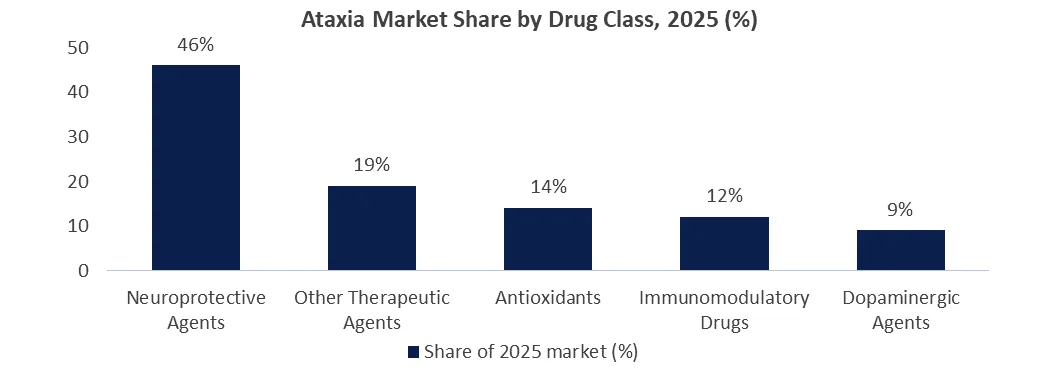
By treatment type, pharmacological treatment leads at about 61% of 2025 value, followed by supportive and symptomatic care (19%), physical and rehabilitation therapy (17%), gene therapy (2%) and stem cell-based therapy (1%). Gene therapy is the fastest-growing treatment type at about 32.0% CAGR from a small base, contingent on regulatory outcomes. By drug class, neuroprotective agents lead at about 46%, followed by other therapeutic agents (19%), antioxidants (14%), immunomodulatory drugs (12%) and dopaminergic agents (9%). Oral administration accounts for about 71%, intravenous 15%, other routes (including subcutaneous and intrathecal) 10% and intramuscular 4%.
Ataxia Diagnosis Market, Distribution Channel and End-User Analysis
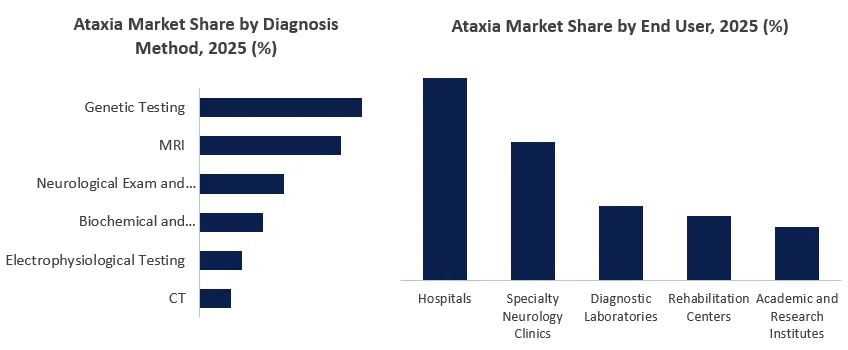
Genetic testing is the largest diagnosis method at about 31% of 2025 value, followed by MRI (27%), neurological examination and clinical assessment (16%), biochemical and laboratory testing (12%), electrophysiological testing (8%) and CT (6%). By distribution channel, hospital pharmacies lead at about 47%, retail pharmacies hold 38% and online pharmacies 15%, the fastest channel at about 14.5% CAGR. Hospitals are the largest end user at about 38%, followed by specialty neurology clinics (26%), diagnostic laboratories (14%), rehabilitation centers (12%) and academic and research institutes (10%).
|
Segmentation |
Largest segment (2025 share) |
Fastest segment (CAGR) |
SMR view |
|
Type of ataxia |
Hereditary ataxia (66%) |
Hereditary ataxia (12.1%) |
Friedreich’s ataxia and SCA carry the pipeline |
|
Treatment type |
Pharmacological treatment (61%) |
Gene therapy (32.0%) |
Drugs anchor; gene therapy arrives late |
|
Drug class |
Neuroprotective agents (46%) |
Other therapeutic agents (13.4%) |
Novel mechanisms outgrow legacy classes |
|
Diagnosis method |
Genetic testing (31%) |
Genetic testing (13.8%) |
Earlier molecular diagnosis lifts every segment |
|
Route of administration |
Oral (71%) |
Other routes (14.2%) |
Subcutaneous and intrathecal products emerge |
|
Distribution channel |
Hospital pharmacies (47%) |
Online pharmacies (14.5%) |
Specialty channels manage rare-disease supply |
|
End user |
Hospitals (38%) |
Specialty neurology clinics (12.9%) |
Ataxia centers of excellence gain share |
Global Ataxia Market Regional Analysis: North America, Europe, Asia Pacific, Middle East & Africa and South America
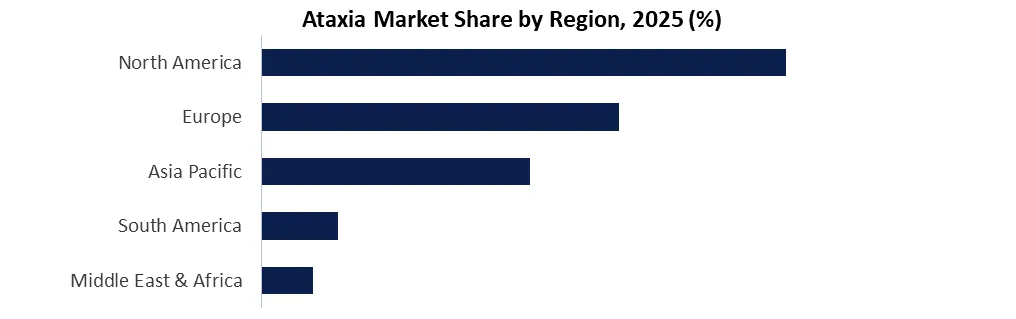
North America is the largest regional market, accounting for about 41% of global value in 2025. The United States is the anchor: the FDA approved the first Friedreich’s ataxia drug, the National Institute of Neurological Disorders and Stroke (NINDS) sponsors ataxia research, and Biogen reported roughly USD 75 million of U.S. Skyclarys revenue in Q3 2025 and about USD 89 million in Q4 2025. The region is mature, so growth is projected at about 10.6% CAGR, led by new regulatory decisions. Europe holds about 28% of 2025 value and is expected to grow at about 11.0% CAGR as Biogen’s continued European launch of Skyclarys is expanding patient access.
Asia Pacific is projected to be the fastest-growing region at a 13.2% CAGR through 2034, supported by rising neurological awareness, expanding genetic testing capacity and rare-disease policy such as India’s National Policy for Rare Diseases. Middle East & Africa holds about 4% of 2025 value and is projected to grow at about 11.5% CAGR, and South America about 6%, growing at about 11.8% CAGR, where NIH-hosted epidemiology reviews note that prevalence data remain scarce and genetic screening capacity is limited.
Ataxia Companies and Competitive Landscape: Who Are the Top Ataxia Drug Developers and Players?
The ataxia competitive landscape includes several distinct groups rather than a single set of comparable companies. Biogen is the only company with a marketed disease-specific Friedreich’s ataxia drug in this benchmark. Biohaven, PTC Therapeutics and Larimar are regulatory-stage developers with different mechanisms and different FDA positions, and Lexeo leads the gene therapy group with a pivotal cardiac program. Diagnostic, imaging and rehabilitation suppliers complete the ecosystem. These groups compete on different dimensions and should not be ranked as though they were identical producers.
|
Group |
Examples |
Role |
|
Marketed-drug leader |
Biogen (Skyclarys, omaveloxolone) |
Approved Friedreich’s ataxia therapy and global launch |
|
Regulatory-stage drug developers |
Biohaven (troriluzole), PTC Therapeutics (vatiquinone), Larimar Therapeutics (nomlabofusp) |
SCA, Friedreich’s ataxia drug and protein-replacement candidates |
|
Gene therapy developers |
Lexeo Therapeutics (LX2006); other Friedreich’s ataxia gene programs |
AAV gene therapy for ataxia cardiomyopathy and neurological disease |
|
Genetic testing and laboratory suppliers |
Illumina, Labcorp, Quest Diagnostics, Eurofins Scientific, Macrogen, MedGenome |
NGS, repeat-expansion and panel testing |
|
Imaging suppliers |
GE HealthCare, Siemens Healthineers, Philips, Canon Medical, Fujifilm |
MRI and CT systems for cerebellar imaging |
|
Rehabilitation technology suppliers |
DIH (Hocoma), Ekso Bionics |
Gait and balance rehabilitation devices |
Ataxia Company Benchmark: Disclosed Results and Regulatory Signals, 2025–2026
|
Company |
Strategic signal |
|
Biogen |
Skyclarys global revenue USD 178.2 Mn in Q3 2026 (+34.1%) and USD 496.8 Mn in nine months of 2026 (+28.3%); patients on therapy grew ~30% in 2025 |
|
Biohaven |
FDA issued a complete response letter for troriluzole (Vyglxia) in SCA on 4 Nov 2025; resubmission accepted on 22 Oct 2026 with an FDA action date in Q1 2027 and an advisory committee planned |
|
PTC Therapeutics |
FDA complete response letter for vatiquinone on 19 Aug 2025; PROVE-FA open-label study with matched natural-history control planned from Q3 2026 |
|
Larimar Therapeutics |
Breakthrough Therapy Designation for nomlabofusp (24 Feb 2026); BLA submission completed; BLA acceptance expected early 2027 and U.S. approval targeted mid-2027 |
|
Lexeo Therapeutics |
SUNRISE-FA 2 pivotal trial design finalised (15 Jun 2026); accelerated-approval BLA targeted for 2028; cash USD 246.6 Mn with runway into 2028 |
Global Ataxia Market Recent Developments, Drug Approvals and Industry News | 2025–2026
|
Date |
Development |
Why it matters |
|
6 Feb 2026 |
Biogen reports full-year 2025 results; Skyclarys patients on therapy up ~30% |
Demand for the approved therapy keeps growing |
|
24 Feb 2026 |
FDA grants Breakthrough Therapy Designation to Larimar’s nomlabofusp |
Faster review path for frataxin replacement |
|
15 Jun 2026 |
Lexeo finalises SUNRISE-FA 2 pivotal design for LX2006 |
Defines gene therapy path to an accelerated-approval BLA |
|
29 Jun 2026 |
Larimar submits first BLA module and reports long-term open-label data |
Begins formal FDA review |
|
22 Oct 2026 |
FDA accepts Biohaven’s troriluzole resubmission; action date in Q1 2027 |
Potential first SCA approval |
|
28 Oct 2026 |
Biogen reports Q3 2026; Skyclarys revenue USD 178.2 Mn (+34.1%) |
Commercial benchmark for the segment |
|
Nov 2026 |
Larimar completes its nomlabofusp BLA submission and presents at ICAR 2026 |
U.S. approval targeted mid-2027 |
Global Ataxia Market Scope: Inquire before buying
|
Report coverage |
Details |
|
Base Year |
2025 |
|
Forecast Period |
2026–2034 |
|
Historical Data |
2020 to 2025 |
|
Market Size in 2025 |
USD 1.38 Billion |
|
Market Size in 2034 |
USD 3.65 Billion |
|
Forecast Period 2026 to 2034 CAGR |
11.4% |
|
By Type of Ataxia |
Hereditary Ataxia (Spinocerebellar Ataxia (SCA), Friedreich’s Ataxia, Episodic Ataxia, Ataxia-Telangiectasia, Other Hereditary Ataxias); Acquired Ataxia (Autoimmune Ataxia, Drug-Induced Ataxia, Alcohol-Related Ataxia, Infection-Related Ataxia, Nutritional and Metabolic Ataxia); Sporadic and Idiopathic Ataxia (Multiple System Atrophy-Cerebellar Type (MSA-C), Idiopathic Late-Onset Cerebellar Ataxia, Other Sporadic Ataxias) |
|
By Treatment Type |
Pharmacological Treatment; Gene Therapy; Stem Cell-Based Therapy; Physical and Rehabilitation Therapy; Supportive and Symptomatic Care |
|
By Drug Class |
Antioxidants; Neuroprotective Agents; Immunomodulatory Drugs; Dopaminergic Agents; Other Therapeutic Agents |
|
By Diagnosis Method |
Genetic Testing; Magnetic Resonance Imaging (MRI); Computed Tomography (CT); Electrophysiological Testing; Biochemical and Laboratory Testing; Neurological Examination and Clinical Assessment |
|
By Route of Administration |
Oral; Intravenous; Intramuscular; Other Routes of Administration |
|
By Distribution Channel |
Hospital Pharmacies; Retail Pharmacies; Online Pharmacies |
|
By End User |
Hospitals; Specialty Neurology Clinics; Diagnostic Laboratories; Rehabilitation Centers; Academic and Research Institutes |
Global Ataxia Market, By Region
North America (United States, Canada, Mexico)
Europe (Germany, United Kingdom, France, Italy, Spain, Netherlands, Switzerland, Sweden, Denmark, Belgium, Austria, Poland, Portugal, Rest of Europe)
Asia Pacific (China, Japan, India, South Korea, Australia, New Zealand, Singapore, Taiwan, Thailand, Malaysia, Indonesia, Rest of Asia Pacific)
Middle East & Africa (United Arab Emirates, Saudi Arabia, Israel, Turkey, South Africa, Egypt, Rest of Middle East & Africa)
South America (Brazil, Argentina, Chile, Colombia, Rest of South America)
Global Ataxia Market, Key Players
1. North America
- Pfizer Inc.
- Biogen
- Biohaven Pharmaceuticals
- Neurocrine Biosciences
- Acorda Therapeutics, Inc.
- Viatris Inc.
- Amneal Pharmaceuticals LLC.
- Larimar Therapeutics, Inc.
- Solid Biosciences
- Lexeo Therapeutics
- PTC Therapeutics
- Ionis Pharmaceuticals
- Wave Life Sciences
- Ultragenyx Pharmaceutical
- Voyager Therapeutics
- Intellia Therapeutics, Inc.
- Editas Medicine
- bluebird bio, Inc.
- Bausch Health Companies Inc.
- Apotex Inc.
2. Europe
- Novartis AG
- F. Hoffmann-La Roche Ltd.
- Sanofi
- Merck KGaA
- GlaxoSmithKline plc (GSK)
- AstraZeneca
- UCB S.A.
- H. Lundbeck A/S
- Novo Nordisk A/S
- Minoryx Therapeutics
- Intrabio
3. Asia-Pacific
- Takeda Pharmaceutical Company Limited
- Eisai Co., Ltd.
- Sumitomo Dainippon Pharma Co., Ltd.
- Sun Pharmaceutical Industries Ltd.
- Cipla Inc.
- Lupin Limited
- Aurobindo Pharma Ltd.
- Biocon
- Glenmark Pharmaceuticals Limited
- Mankind Pharma
- Cadila Pharmaceuticals
- Wockhardt
- Takeda Healthcare Philippines, Inc.
4. Middle East & Africa
- Teva Pharmaceutical Industries Ltd.
- Merck & Co. (MSD)
- Aspen Pharmacare Holdings Limited
- Adcock Ingram
- Julphar (Gulf Pharmaceutical Industries)
5. South America
- EMS S/A
- Aché Laboratórios Farmacêuticos
- Eurofarma
- Biolab Farmacêutica
- Laboratorios Bagó
Frequently Asked Questions
Ans: Friedreich’s ataxia represents approximately 46% of total market value, supported by its prevalence, established treatment demand and disease-specific drug commercialization.
Ans: Nomlabofusp targets frataxin replacement, while LX2006 addresses genetic deficiencies through gene therapy, potentially expanding disease-modifying treatment options through 2034.
Ans: Genetic testing accounts for approximately 31% of diagnostic market value, as next-generation sequencing and repeat-expansion testing improve hereditary ataxia identification.
Ans: Asia Pacific is forecast to grow at 13.2% CAGR, supported by expanding genetic testing capacity, neurological awareness and rare-disease policy initiatives.
Ans: FDA acceptance of troriluzole’s resubmission, with an action date in Q1 2027, creates potential for the first approved SCA-specific therapy.
Ans: Gene therapy is forecast to grow at 32.0% CAGR, while online pharmacies offer distribution opportunities with an estimated 14.5% CAGR.
1. Executive Market Landscape and Industry Overview
1.1. Global Ataxia Market Size and Growth Forecast, 2025–2034 (Value USD Million)
1.2. Historical Evolution of Ataxia Research and Treatment Development
1.3. Definition, Clinical Scope and Classification of Ataxia Disorders
1.4. Neurological Mechanisms Underlying Cerebellar Dysfunction and Motor Impairment
1.5. Global Disease Burden and Patient Population Assessment
1.6. CAGR Analysis of Global Ataxia Market During 2026–2034
2. Ataxia Market Dynamics
2.1. Ataxia Market Trends
2.2. Ataxia Market Dynamics
- 2.2.1. Drivers
- 2.2.2. Restraints
- 2.2.3. Opportunities
- 2.2.4. Challenges
2.3. PORTER's Five Forces Analysis of Ataxia Industry
2.4. PESTLE Analysis of Global Ataxia Market
2.5. Competitive Intensity Across Emerging Ataxia Therapeutic Development
2.6. Market Entry Barriers and Commercialization Challenges
3. Ataxia Market Macroeconomic Factors
3.1. Global Healthcare Expenditure and Neurological Disease Treatment Spending
3.2. Government Funding for Rare Neurological Disorder Research
3.3. Pharmaceutical R&D Expenditure and Neurological Drug Development Investments
3.4. Healthcare Infrastructure and Specialized Neurology Care Availability
3.5. Rare Disease Reimbursement Policies and Treatment Affordability
3.6. International Trade, Pharmaceutical Pricing and Supply Chain Economics
4. Ataxia Epidemiology and Global Disease Burden
4.1. Global Ataxia Prevalence Across Different Patient Population Groups
4.2. Incidence Patterns of Hereditary and Acquired Ataxia Disorders
4.3. Geographic Distribution of Spinocerebellar Ataxia Patient Populations
4.4. Friedreich's Ataxia Prevalence and Genetic Carrier Distribution
4.5. Age-Specific Disease Onset and Progressive Neurological Deterioration
4.6. Regional Patient Diagnosis Rates and Disease Recognition Gaps
5. Ataxia Pathophysiology, Genetics and Disease Classification
5.1. Cerebellar Degeneration and Associated Neurological Dysfunction Mechanisms
5.2. Genetic Mutations Responsible for Hereditary Ataxia Disorders
5.3. Repeat Expansion Mechanisms in Spinocerebellar Ataxia
5.4. FXN Gene Mutations and Friedreich's Ataxia Pathogenesis
5.5. Mitochondrial Dysfunction and Oxidative Stress in Ataxia
5.6. Immune-Mediated and Metabolic Mechanisms Behind Acquired Ataxia
6. Ataxia Diagnosis, Screening and Clinical Assessment Landscape
6.1. Genetic Testing for Inherited Ataxia Mutation Identification
6.2. Magnetic Resonance Imaging for Cerebellar Structural Assessment
6.3. Neurological Examination and Clinical Symptom Evaluation
6.4. Electrophysiological Testing for Neuromuscular Dysfunction Assessment
6.5. Biomarker Development for Early Ataxia Detection
6.6. Differential Diagnosis of Progressive Cerebellar Disorders
7. Ataxia Treatment Landscape and Therapeutic Approaches
7.1. Pharmacological Treatment for Ataxia Symptom Management
7.2. Disease-Modifying Therapies Targeting Underlying Genetic Mechanisms
7.3. Gene Therapy Approaches for Inherited Ataxia Disorders
7.4. Immunomodulatory Treatment for Autoimmune and Acquired Ataxia
7.5. Physical Rehabilitation and Occupational Therapy Interventions
7.6. Supportive Care for Speech, Mobility and Swallowing
8. Ataxia Drug Development and Therapeutic Pipeline Landscape
8.1. Investigational Drug Candidates Targeting Spinocerebellar Ataxia
8.2. Friedreich's Ataxia Therapeutic Pipeline and Development Progress
8.3. Gene Silencing and RNA-Based Therapeutic Development Strategies
8.4. Neuroprotective Drug Candidates Targeting Cerebellar Neuronal Degeneration
8.5. Clinical Development of Disease-Modifying Ataxia Treatment Candidates
8.6. Emerging Therapeutic Targets and Novel Molecular Treatment Approaches
9. Ataxia Clinical Trials and Drug Approval Landscape
9.1. Global Clinical Trial Distribution Across Ataxia Subtypes
9.2. Phase-Wise Clinical Development of Investigational Ataxia Therapies
9.3. Clinical Trial Endpoints and Neurological Outcome Measurement
9.4. Patient Recruitment Challenges in Rare Ataxia Trials
9.5. Regulatory Milestones for Investigational Ataxia Drug Candidates
9.6. Clinical Trial Collaborations and Research Institution Participation
10. Ataxia Industry Trends and Emerging Technology Requirements
10.1. Growing Adoption of Genetic Testing for Ataxia
10.2. Advancements in Precision Medicine for Hereditary Ataxia
10.3. Increasing Research on Gene-Based Therapeutic Interventions
10.4. Development of Digital Tools for Neurological Assessment
10.5. Integration of Biomarkers in Ataxia Disease Monitoring
10.6. Growing Focus on Early Diagnosis and Intervention
11. Ataxia Patient Management and Healthcare Delivery Ecosystem
11.1. Specialized Neurology Clinics and Multidisciplinary Patient Management
11.2. Hospital-Based Diagnosis and Long-Term Neurological Treatment
11.3. Rehabilitation Programs for Mobility and Functional Independence
11.4. Genetic Counseling for Families With Hereditary Ataxia
11.5. Patient Support Organizations and Rare Disease Advocacy
11.6. Home-Based Care and Long-Term Disease Management Requirements
12. Ataxia Market Access, Pricing and Reimbursement Landscape
12.1. Pricing Structures for Approved Ataxia Therapeutic Products
12.2. Insurance Coverage for Rare Neurological Disease Treatments
12.3. Government Reimbursement Policies and Orphan Drug Accessibility
12.4. Patient Assistance Programs and Financial Support Mechanisms
12.5. Treatment Affordability Across Developed and Emerging Markets
12.6. Healthcare Payer Perspectives on Novel Ataxia Therapies
13. Ataxia Research Infrastructure and Innovation Ecosystem
13.1. Academic Research Institutions Supporting Ataxia Disease Investigation
13.2. Biotechnology Investments in Novel Ataxia Therapeutic Development
13.3. Genetic Research Networks and International Patient Registries
13.4. Artificial Intelligence Applications in Ataxia Diagnosis
13.5. Research Collaborations Between Pharmaceutical and Academic Organizations
13.6. Intellectual Property and Innovation Across Ataxia Therapeutics
14. Ataxia Regulatory, Quality and Clinical Standards
14.1. FDA Regulatory Framework for Ataxia Therapeutic Approvals
14.2. EMA Requirements for European Ataxia Drug Authorization
14.3. Orphan Drug Designation and Rare Disease Incentives
14.4. Clinical Trial Compliance and Good Clinical Practice Standards
14.5. Pharmacovigilance Requirements for Neurological Therapeutic Products
14.6. Patient Safety Monitoring and Post-Marketing Surveillance Requirements
15. Ataxia Market Regional and Country-Level Industry Landscape
15.1. North American Ataxia Research and Therapeutic Commercialization Landscape
15.2. European Rare Neurological Disease Treatment and Research Infrastructure
15.3. Asia-Pacific Ataxia Diagnosis and Pharmaceutical Market Development
15.4. Middle East and Africa Neurological Healthcare Infrastructure Expansion
15.5. South American Ataxia Treatment Accessibility and Market Opportunities
15.6. Regional Patient Prevalence, Research Funding and Treatment Availability
16. Ataxia Market Unmet Needs and Future Opportunities
16.1. Delayed Diagnosis and Limited Genetic Screening Availability
16.2. Limited Disease-Modifying Treatment Options Across Ataxia Subtypes
16.3. High Treatment Costs and Restricted Patient Accessibility
16.4. Challenges in Developing Effective Neurological Clinical Endpoints
16.5. Opportunities for Personalized and Genotype-Specific Ataxia Treatments
16.6. Expansion of Global Rare Disease Research Collaborations
17. Ataxia Pharmaceutical Supply Chain and Commercial Ecosystem
17.1. Active Pharmaceutical Ingredient Sourcing for Ataxia Drug Manufacturing
17.2. Specialized Manufacturing Requirements for Advanced Neurological Therapeutics
17.3. Biotechnology Production and Pharmaceutical Formulation Development Processes
17.4. Temperature-Controlled Distribution of Sensitive Therapeutic Products
17.5. Pharmaceutical Procurement Across Hospitals and Specialty Pharmacies
17.6. Supply Chain Resilience and Treatment Availability Management
18. Ataxia Market Innovation, R&D and Product Development
18.1. Development of Novel Disease-Modifying Ataxia Therapeutic Candidates
18.2. Advancements in Gene Editing and RNA Therapeutics
18.3. Research into Mitochondrial Function and Neuroprotection
18.4. Development of Biomarker-Based Disease Monitoring Technologies
18.5. Strategic Investments in Rare Neurological Disease Research
18.6. Pharmaceutical Collaborations Supporting Advanced Ataxia Treatment Development
19. Ataxia Market Adoption, Utilization and Patient Economics
19.1. Adoption of Approved Ataxia Treatments Across Healthcare Facilities
19.2. Patient Treatment Initiation and Therapy Continuation Rates
19.3. Long-Term Medication Utilization Across Progressive Ataxia Disorders
19.4. Treatment Switching Patterns and Therapeutic Response Monitoring
19.5. Patient Retention and Specialty Neurology Care Utilization
19.6. Healthcare Expenditure Associated With Long-Term Ataxia Management
20. Ataxia Industry SWOT, Investments and Strategic Developments
20.1. Competitive Strengths of Established Neurological Pharmaceutical Manufacturers
20.2. Therapeutic Limitations and Challenges in Ataxia Treatment
20.3. Emerging Opportunities in Genetic and Molecular Therapeutics
20.4. Competitive Threats From Alternative Neurological Treatment Approaches
20.5. Strategic Investments in Advanced Ataxia Drug Development
20.6. Major Product Launches, Partnerships and Clinical Developments
21. Global Ataxia Market Size and Forecast by Segmentation (Value USD Million), 2025–2034
21.1. Global Ataxia Market Size and Forecast, By Type of Ataxia
- Hereditary Ataxia
- Acquired Ataxia
- Sporadic and Idiopathic Ataxia
21.2. Global Ataxia Market Size and Forecast, By Treatment Type
- Pharmacological Treatment
- Gene Therapy
- Stem Cell-Based Therapy
- Physical and Rehabilitation Therapy
- Supportive and Symptomatic Care
21.3. Global Ataxia Market Size and Forecast, By Drug Class
- Antioxidants
- Neuroprotective Agents
- Immunomodulatory Drugs
- Dopaminergic Agents
- Other Therapeutic Agents
21.4. Global Ataxia Market Size and Forecast, By Diagnosis Method
- Genetic Testing
- Magnetic Resonance Imaging (MRI)
- Computed Tomography (CT)
- Electrophysiological Testing
- Biochemical and Laboratory Testing
- Neurological Examination and Clinical Assessment
21.5. Global Ataxia Market Size and Forecast, By End User
- Hospitals
- Specialty Neurology Clinics
- Diagnostic Laboratories
- Rehabilitation Centers
- Academic and Research Institutes
21.6. Global Ataxia Market Size and Forecast, By Distribution Channel
- Hospital Pharmacies
- Retail Pharmacies
- Online Pharmacies
Additional classification – By Route of Administration:
- Oral
- Intravenous
- Intramuscular
- Other Routes of Administration
22. Global Ataxia Market Regional and Country-Level Forecast
22.1. North America Ataxia Market Size and Forecast by Country
22.2. Europe Ataxia Market Size and Forecast by Country
22.3. Asia-Pacific Ataxia Market Size and Forecast by Country
22.4. Middle East and Africa Ataxia Market Size and Forecast
22.5. South America Ataxia Market Size and Forecast by Country
22.6. Regional Market Share, Growth Rates and Competitive Distribution
23. Global Ataxia Market Competitive Landscape
23.1. SMR Competition Matrix and Competitive Positioning Assessment
23.2. Market Share of Leading Ataxia Pharmaceutical Companies
23.3. Competitive Benchmarking Across Therapeutic and Clinical Portfolios
23.4. Revenue Performance and Financial Health Benchmarking (2025)
23.5. Research Expenditure and Pipeline Development Comparison Across Companies
23.6. Mergers, Acquisitions, Partnerships and Recent Strategic Developments
24. Global Ataxia Market Structure and Competitive Positioning
24.1. Established Pharmaceutical Companies and Neurological Treatment Leaders
24.2. Emerging Biotechnology Companies Developing Novel Ataxia Therapeutics
24.3. Gene Therapy Developers Targeting Inherited Ataxia Disorders
24.4. Companies Developing RNA-Based and Genetic Treatment Platforms
24.5. Generic Pharmaceutical Manufacturers and Supportive Treatment Providers
24.6. Competitive Positioning Across Regional Pharmaceutical Markets and Therapeutic Segments
25. Ataxia Therapeutic Pipeline and Clinical Development Benchmarking
25.1. Investigational Ataxia Drug Candidates Across Clinical Development Phases
25.2. Pipeline Distribution Across Hereditary and Acquired Ataxia
25.3. Gene Therapy Candidates and Molecular Target Development Progress
25.4. Clinical Trial Sponsorship and Pharmaceutical Research Collaborations
25.5. Investigational Drug Mechanisms and Therapeutic Target Differentiation
25.6. Clinical Development Milestones and Expected Commercialization Opportunities
26. Ataxia Market Manufacturers' Strategies and Expansion Plans
26.1. Expansion of Neurological Therapeutic Product and Pipeline Portfolios
26.2. Development of Innovative Gene-Based and Molecular Treatment Solutions
26.3. Expansion Across Rare Disease Treatment and Specialty Care Markets
26.4. Strategic Collaborations With Biotechnology and Research Organizations
26.5. Investments in Clinical Trials and Therapeutic Research Infrastructure
26.6. Geographic Expansion Across Established and Emerging Pharmaceutical Markets
27. Ataxia Market Competitive Outlook and Future Positioning
27.1. Competitive Dynamics Across Hereditary and Acquired Ataxia Treatment Markets
27.2. Market Concentration Across Established and Emerging Therapeutic Manufacturers
27.3. Technology Differentiation Through Genetic and Molecular Treatment Approaches
27.4. Competitive Positioning of Established Pharmaceutical and Biotechnology Companies
27.5. Future Opportunities Across Personalized and Disease-Modifying Ataxia Therapies
27.6. Long-Term Competitive Outlook for Global Ataxia Treatment Development
28. Company Profiles: Global Ataxia Market Key Players
Detailed Company Profiles Considering the Following Parameters:
28.1. Company Overview, Historical Background and Business Operations
28.2. Ataxia-Related Therapeutic Portfolio and Product Offerings
28.3. Neurological Drug Development and Research Capabilities
28.4. Clinical Pipeline, Regulatory Approvals and Commercialization
28.5. Financial Performance, Geographic Presence and Market Positioning
28.6. SWOT Analysis, Strategic Initiatives and Recent Developments
North America
- Pfizer Inc.
- Biogen
- Biohaven Pharmaceuticals
- Neurocrine Biosciences
- Acorda Therapeutics, Inc.
- Viatris Inc.
- Amneal Pharmaceuticals LLC.
- Larimar Therapeutics, Inc.
- Solid Biosciences
- Lexeo Therapeutics
- PTC Therapeutics
- Ionis Pharmaceuticals
- Wave Life Sciences
- Ultragenyx Pharmaceutical
- Voyager Therapeutics
- Intellia Therapeutics, Inc.
- Editas Medicine
- bluebird bio, Inc.
- Bausch Health Companies Inc.
- Apotex Inc.
Europe
- Novartis AG
- F. Hoffmann-La Roche Ltd.
- Sanofi
- Merck KGaA
- GlaxoSmithKline plc (GSK)
- AstraZeneca
- UCB S.A.
- H. Lundbeck A/S
- Novo Nordisk A/S
- Minoryx Therapeutics
- Intrabio
Asia-Pacific
- Takeda Pharmaceutical Company Limited
- Eisai Co., Ltd.
- Sumitomo Dainippon Pharma Co., Ltd.
- Sun Pharmaceutical Industries Ltd.
- Cipla Inc.
- Lupin Limited
- Aurobindo Pharma Ltd.
- Biocon
- Glenmark Pharmaceuticals Limited
- Mankind Pharma
- Cadila Pharmaceuticals
- Wockhardt
- Takeda Healthcare Philippines, Inc.
Middle East & Africa
- Teva Pharmaceutical Industries Ltd.
- Merck & Co. (MSD)
- Aspen Pharmacare Holdings Limited
- Adcock Ingram
- Julphar (Gulf Pharmaceutical Industries)
South America
- EMS S/A
- Aché Laboratórios Farmacêuticos
- Eurofarma
- Biolab Farmacêutica
- Laboratorios Bagó
29. Ataxia Key Findings and Strategic Market Assessment
29.1. Global Ataxia Market Growth Drivers and Emerging Opportunities
29.2. Leading Disease Categories and Therapeutic Market Segments
29.3. Regional Market Leaders and Patient Population Distribution
29.4. Competitive Developments and Pharmaceutical Innovation Trends
29.5. Clinical Pipeline Opportunities and Future Treatment Advancements
29.6. Long-Term Industry Outlook and Commercialization Potential Assessment
30. Ataxia Strategic Moves and Industry Outlook
30.1. Major Pharmaceutical Investments in Ataxia Therapeutic Development
30.2. Strategic Partnerships Across Neurological Research and Biotechnology
30.3. Expansion of Genetic and Precision Medicine Capabilities
30.4. Clinical Pipeline Advancements and Regulatory Approval Developments
30.5. Emerging Commercial Opportunities Across Untreated Patient Populations
30.6. Future Strategic Direction of Global Ataxia Industry
31. Research Methodology
31.1. Research Objective, Market Scope and Study Framework
31.2. Primary Research and Industry Stakeholder Interview Process
31.3. Secondary Research and Clinical Literature Assessment
31.4. Market Size Estimation and Forecasting Methodology
31.5. Data Validation, Triangulation and Analytical Assessment
31.6. Assumptions, Limitations and Research Scope Considerations