ENG
ENG Japanese
  French
  German
  Korean
Hydraulic Crane Market 2025–2032 Market Size, Volume Economics, Segment Analysis, Future Growth Path and Investment Potential
The Hydraulic Crane Market size was valued at USD 14.45 billion in 2025 and is projected to reach USD 19.22 billion by 2032.
The Hydraulic Crane Market is witnessing significant growth, driven by technological advancements and growing demand across multiple sectors. The integration of smart technologies, such as IoT and automation, is significantly enhancing operational efficiency and safety, driving investments in the market. Furthermore, the growing focus on sustainability is prompting a shift toward eco-friendly hydraulic cranes that minimize environmental impact without compromising performance. As industries expand, the demand for versatile lifting solutions becomes more critical, setting the stage for a strong growth trajectory in the hydraulic crane sector.
Government and private investments in construction and transportation projects are expected to further boost the demand for hydraulic cranes. The increasing complexity of modern construction tasks, requiring advanced lifting capabilities, supports this trend. With continued innovations and a surge in infrastructure projects, the Hydraulic Crane Market is positioned for sustained growth, driven by cutting-edge technologies and the expanding need for efficient lifting solutions across industries.

To get more Insights: Request Free Sample Report
Hydraulic Crane Market Report Overview:
The Hydraulic Crane Market is expected to grow at a CAGR of 4.16% from 2026 to 2032, driven by growing demand across industrial, commercial, and technology-driven sectors. Adoption of hydraulic cranes is increasing in emerging economies, where rapid industrialization and urbanization are driving demand. With continuous innovation and investments in these regions, the hydraulic crane market is poised for sustained growth.
Hydraulic Crane Market Key Highlights:
- Global Hydraulic Crane Market Volume is expected to grow at a CAGR of 3.93% from 2026 to 2032.
- Truck Mounted Cranes segment dominated with a 45.86% global market share in 2025 and is expected to grow at a 4.56% CAGR during 2026-2032.
- Asia Pacific expected to grow at a CAGR of 5.23% over 2026-2032.
- North America Hydraulic Crane Market Volume is expected to grow at a CAGR of 3.34% from 2026 to 2032.
- The U.S. is dominate country in North American Market, reaching value USD 2.62 Bn. by 2032.
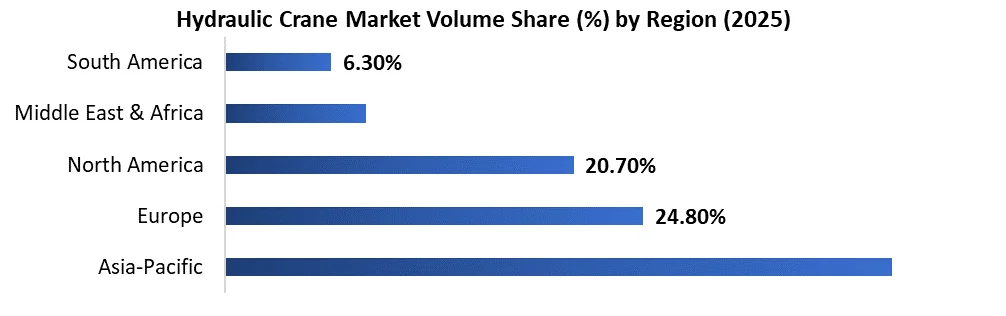
Regional Breakdown of Hydraulic Crane Units Sold in 2025:
|
Region |
Share (%) 2025 |
Description |
|
Asia Pacific |
39.6% |
Largest demand; construction boom in China/India, mining in Australia, offshore wind in Japan/Taiwan. |
|
Europe |
24.80% |
Driven by infrastructure renewal, renewable energy, and port logistics. |
|
North America |
20.70% |
U.S. infrastructure modernization, oil & gas, and industrial expansion. |
|
Middle East & Africa |
8.40% |
Oil & gas rigs, mega infrastructure projects in Saudi/UAE/Nigeria. |
|
South America |
6.30% |
Mining in Brazil/Chile, port expansion, moderate construction growth. |
In 2025, Asia Pacific continues to lead global unit sales driven by robust infrastructure and construction activities in China, India, and Southeast Asia. Europe and North America retain strong positions with substantial demand from industrial modernization, energy projects, and urban development. Middle East & Africa and South America show moderate volumes supported by oil & gas ventures, mining operations, and strategic infrastructure expansion.
DROCT Framework for the Hydraulic Crane Market:
|
Dimension |
Market Impact |
|
Drivers |
High demand for infrastructure projects, technological advancements, and urbanization. |
|
Restraints |
High capital costs, raw material price volatility, and regulatory compliance challenges. |
|
Opportunities |
Growth in eco-friendly, automated, and smart cranes; expansion in offshore and renewable energy sectors. |
|
Challenges |
Pressure to improve efficiency, reduce costs, and adapt to economic slowdowns and competition from alternatives. |
|
Trends |
Adoption of energy-efficient, automated cranes with smart technologies for predictive maintenance and safety. |
Consumer vs Demand Insights in the Hydraulic Crane Market:
Consumer Insights:
- Preference for Technological Advancements: Consumers Favor hydraulic cranes with enhanced safety, efficiency, and reliability.
- Customization: Rising demand for customized solutions tailored to specific project requirements
Demand Insights:
- Technological Features: The Hydraulic Crane Market demands cranes with smart technology, such as IoT and predictive maintenance capabilities.
- Operational Performance: There's a focus on cranes that optimize productivity and minimize downtime.
The Impact of Regulatory Compliance on Hydraulic Crane Innovation:
- Growing Demand for Safe Cranes: As safety concerns rise, the demand for hydraulic cranes that meet stringent safety standards is increasing.
- Regulatory Compliance Driving Market Growth: In 2025, adherence to safety regulations will drive crane demand as companies aim to avoid penalties and ensure worker safety.
- Manufacturer Focus on Safety: Manufacturers are prioritizing the development of cranes that not only comply with regulations but also enhance operational safety, contributing to hydraulic crane market growth.
Hydraulic Crane Market Segmentation, By Boom Configuration (2025–2032): Strategic Breakdown
Lattice Boom Cranes segment commands the largest revenue share at 55.73% in 2025. This growth is driven by their heavy lifting capacity and durability, making them ideal for large-scale infrastructure projects such as bridge construction, high-rise buildings, and energy installations. Lattice boom cranes offer superior stability and are designed for high-stress environments, which is why they are preferred for demanding applications in sectors like oil & gas, mining, and port operations.
|
By Boom Configuration |
Market Share (%) |
|
Lattice Boom Cranes |
55.73% |
|
Telescoping Boom Cranes |
44.27% |
The Growing Role of Hydraulic Cranes in the Expanding Construction Industry
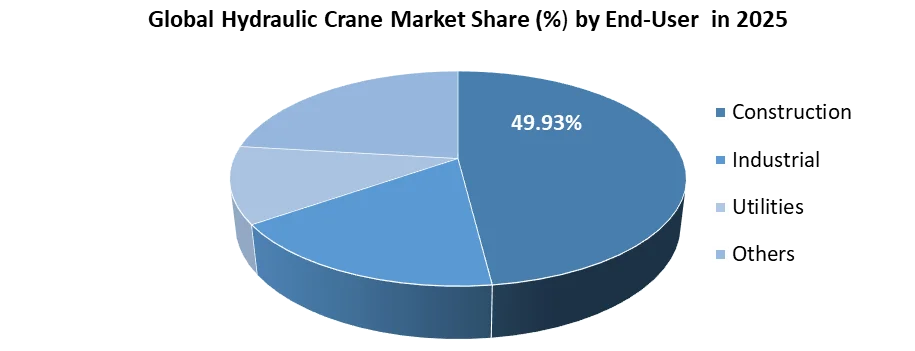
By Capacity, the Construction segment segment is positioned to lead the hydraulic crane market, capturing a 49.93% revenue share in 2025. This growth is attributed to the need for versatile cranes that can perform a wide range of lifting tasks at construction sites. This sector benefits significantly from government initiatives aimed at improving infrastructure and urban development, ensuring consistent demand for hydraulic cranes.
Hydraulic Crane Market Regional Analysis:
North America Hydraulic Crane Market – Market Leader
North America leads the Hydraulic Crane Market with a 32.3% value share in 2025. This strong market position is primarily driven by robust construction activities, large-scale infrastructure development, and significant investments in renewable energy projects. Regulatory support for infrastructure improvements and safety standards further enhances demand for hydraulic cranes, establishing the region as a key player in the global market. The United States and Canada lead the way in this market, with major players like Terex and Manitowoc contributing to the region’s market dominance.
Europe Hydraulic Crane Market – Technology & Defense Modernization Driven
Europe stands as the second-largest market for hydraulic cranes market in 2025. The growth in this region is largely fueled by stringent regulatory frameworks promoting sustainability and safety in the construction industry. Countries across Europe are increasing their investments in infrastructure projects, especially in sectors such as renewable energy and urban development, which significantly boosts the demand for advanced hydraulic cranes. Regulatory policies are actively encouraging the adoption of eco-friendly technologies, further enhancing market prospects for hydraulic crane manufacturers.
Asia-Pacific: Emerging Market Potential
The Asia-Pacific region is experiencing rapid growth in the hydraulic crane market, driven by booming construction activities and increasing urbanization. The region also benefits from rising foreign investments in large-scale construction projects, which increases the demand for advanced hydraulic machinery. China, being the largest market in this region, is home to major players like SANY and XCMG, who dominate the hydraulic crane market.
Hydraulic Crane Market Competitive Landscape
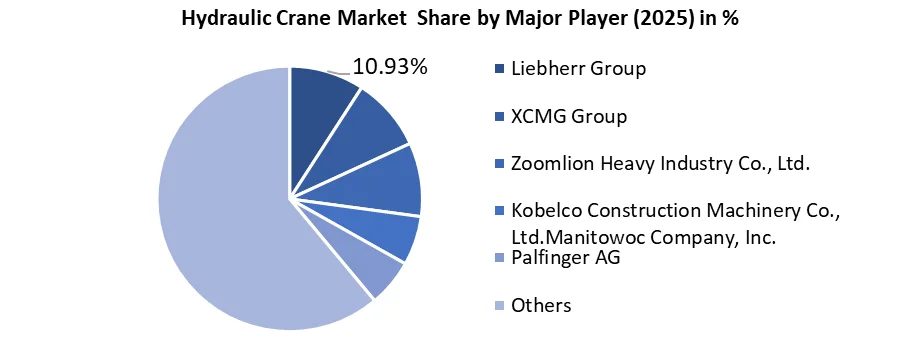
The hydraulic crane market is moderately consolidated with a mix of global OEMs and regional specialists competing across segments such as mobile cranes, crawler cranes, truck mounted cranes, and specialized lifting equipment. Competition is driven by product innovation, service networks, after sales support, brand reputation, and technological advancements (e.g., automation, telematics, safety systems).
What competitors are doing right now
- Developing next-gen hydraulic cranes with telescoping booms and crawler chassis to improve lifting capacity and mobility on rough terrains.
- Integrating smart control systems and IoT for enhanced precision, real-time monitoring, and predictive maintenance.
- Focusing on eco-friendly solutions, with increasing adoption of hybrid and electric cranes to meet sustainability regulations.
- Expanding regional footprint in emerging markets (Asia-Pacific, Middle East) where infrastructure growth drives crane demand and local partnerships accelerate adoption.
Recent Developments in Hydraulic Crane Market
|
Date |
Company |
Development |
Strategic Focus / Impact |
|
Feb 2026 |
Tadano Ltd. |
Launched AC 7.4501 all terrain crane with 450 ton capacity and integrated telematics + Yguying system |
Targets offshore wind and petrochemical projects; enhances lifting radius performance |
|
Jan 2026 |
Liebherr Group |
Announced EUR 185M expansion of Ehingen plant to boost heavy crane production (300–750 tons) |
Expands manufacturing capacity by Q3 2027 to meet demand from wind energy & infrastructure megaprojects |
|
Nov 2025 |
XCMG Group |
Unveiled XCA4000 all terrain crane (4,000 ton capacity) at bauma China 2025 |
Positions as world’s largest hydraulic crane; secured multiple orders from energy infrastructure contractors |
|
Jul 2025 |
Palfinger AG |
Acquired majority stake in a Southeast Asian marine crane manufacturer |
Strengthens Asia Pacific service presence and manufacturing, especially in Singapore, Indonesia, Vietnam |
|
Apr 2025 |
Sany Group |
Formed JV in Saudi Arabia for crane assembly & service aligned with Vision 2030 |
Facility to assemble 200 cranes/yr by 2027 + operator training center |
Hydraulic Crane Market Segments Scope Covered:
|
Global Hydraulic Crane Market |
|||
|
Report Coverage |
Details |
||
|
Base Year: |
2025 |
Forecast Period: |
2026-2032 |
|
Historical Data: |
2020 to 2025 |
Market Size in 2025: |
USD 14.45 Billion |
|
Forecast Period 2026 to 2032 CAGR: |
4.16% |
Market Size in 2032: |
USD 19.22 Billion |
|
Global Fruits and Vegetables Ingredients Market Segment Analysis |
By Type |
Truck-Mounted Cranes Rough Terrain Cranes All Terrain Cranes Crawler Cranes Portable Cranes Others |
|
|
By Power Source |
Diesel-Powered Cranes Electric-Powered Cranes Hybrid Cranes |
||
|
By Boom Configuration |
Lattice Boom Cranes Telescoping Boom Cranes |
||
|
By Capacity |
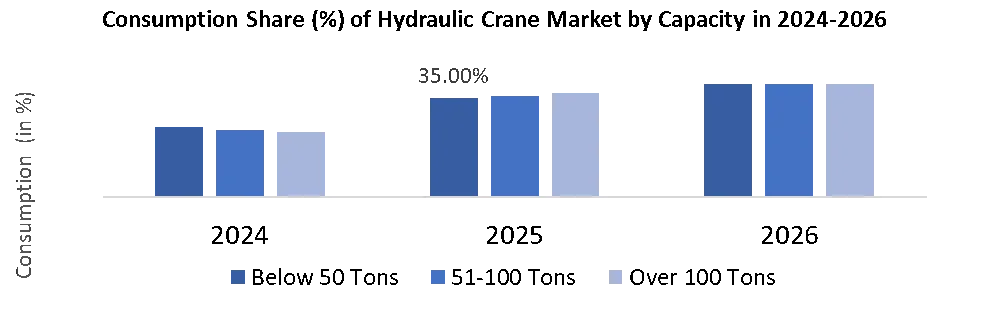
Below 50 Tons 51-100 Tons Over 100 Tons |
||
|
By End-User |
Construction Industrial Utilities Other |
||
Hydraulic Crane Market key Players:
- Liebherr Group
- XCMG Group
- Zoomlion Heavy Industry Co., Ltd.
- Kobelco Construction Machinery Co., Ltd.
- Manitowoc Company, Inc.
- Palfinger AG
- SANY Heavy Industry Co., Ltd.
- Tadano Ltd.
- Konecranes Oyj
- Terex Corporation
- Hiab (Hydrauliska Industri AB / Cargotec)
- Sumitomo Heavy Industries, Ltd.
- ABUS Kransysteme GmbH
- Demag (Tadano Demag)
- Link Belt Cranes
- Fassi Gru S.p.A.
- SENNEBOGEN Maschinenfabrik GmbH
- Hyundai Heavy Industries Co., Ltd.
- Hitachi Sumitomo Heavy Industries Construction Crane Co., Ltd.
- Effer / EffeRS.p.a
- Favelle Favco
- GGR Group
- Normet International Ltd
- Soilmec S.p.A.
- Sunward Intelligent Equipment Co., Ltd
- Lampson International
- NTM – Närpes Trä & Metall
- Air Technical Industries
- TIL Limited
- BVA / i lift Equipment Ltd.
Frequently Asked Questions
North America dominated the market due to rapid construction growth, government initiatives in the region.
Global Hydraulic Crane Market is growing at a CAGR of 4.16% during the forecasting period 2026-2032.
Smart technologies, such as IoT, AI, and telematics, are enhancing the efficiency, safety, and maintenance of hydraulic cranes.
Leading companies include Liebherr, XCMG, SANY, Zoomlion, and Manitowoc.
1. Hydraulic Crane Market Introduction
1.1. Study Assumption and Market Definition
1.2. Scope of the Study
1.3. Executive Summary
2. Global Hydraulic Crane Market: Competitive Landscape
2.1. Stellar Competition Matrix
2.2. Key Players Benchmarking
2.2.1. Company Name
2.2.2. Headquarter
2.2.3. Hydraulic Crane Type
2.2.4. Power Source
2.2.5. Boom Configuration
2.2.6. Number of Hydraulic Crane sold (2025)
2.2.7. End-User Segment
2.2.8. Revenue Details in 2025
2.2.9. Market Share (%)
2.2.10. Growth Rate (%)
2.2.11. Return on Investment (%)
2.2.12. Technological Capabilities
2.2.13. Geographical Presence
2.3. Market Structure
2.3.1. Market Leaders
2.3.2. Market Followers
2.3.3. Emerging Players
2.4. Mergers and Acquisitions Details
3. Hydraulic Crane Market: Dynamics
3.1. Hydraulic Crane Market Trends
3.2. Hydraulic Crane Market Dynamics
3.2.1. Drivers
3.2.2. Restraints
3.2.3. Opportunities
3.2.4. Challenges
3.3. PORTER’s Five Forces Analysis
3.4. PESTLE Analysis
3.5. Regulatory Landscape by Region
3.6. Key Opinion Leader Analysis for the Global Industry
3.7. Analysis of Government Schemes and Initiatives for Industry
4. Hydraulic Crane Market Production & Capacity Analysis 2025
4.1. Global Hydraulic Crane Production by Region and Country
4.2. Manufacturing Output by Type
4.3. Installed Production Capacity vs Capacity Utilization Trends
4.4 Capacity Expansion Plans and Greenfield Investments by OEMs
4.5. Regional Supply Chain Dependencies and Risk Assessment
4.6. Production Lead Time and Order Backlog Trends
5. Hydraulic Crane Market Demand Analysis Hydraulic Crane Market
5.1. Regional Demand Analysis for Hydraulic Cranes (2025–2032)
5.2. Demand for Hydraulic Cranes in Key Industrial Sectors
5.3. Impact of Energy Efficiency Regulations on Hydraulic Crane Demand
5.4. Influence of Sustainability Initiatives on Hydraulic Crane Market Demand
5.5. Technological Advancements and Their Impact on Hydraulic Crane Demand
5.6. Demand for Smart Hydraulic Cranes and IoT Integration
6. Hydraulic Crane Market Trade Analysis (2025)
6.1. Global Import and Export Volumes of Hydraulic Crane by Region
6.2. Major Exporting and Importing Countries for Industrial Hydraulic Crane
6.3. Trade Regulations, Industrial Standards, and Certification Requirements
6.4. Global Trade Flow Mapping and Value Chain Shifts
6.5. Impact of Supply Chain Disruptions on Hydraulic Crane Availability
7. Hydraulic Crane Market Pricing Analysis (2025)
7.1. Average Pricing Trends for Hydraulic Cranes in 2025
7.2. Regional Pricing Analysis of Hydraulic Cranes (2025)
7.3. Impact of Technological Advancements on Hydraulic Crane Pricing
7.4. Pricing Strategies of Key Players in the Hydraulic Crane Market
7.5. Factors Affecting Hydraulic Crane Prices: Raw Materials, Labor, and Regulations
7.6. Pricing Impact of Sustainability and Energy Efficiency Regulations
7.7. Influence of Global Supply Chain on Hydraulic Crane Pricing (2025)
8. Hydraulic Crane Market Supply Chain & Manufacturing Insights
8.1. Supply Chain Overview and Value Chain Mapping
8.2. Raw Material Sourcing and Supplier Landscape
8.3. Component Manufacturing (Hydraulic Systems, Booms, Undercarriages)
8.4. Logistics and Distribution Network Insights
8.5. Manufacturing Technology Adoption and Automation
9. Hydraulic Crane Market End-User & Buyer Insights
9.1. End-User Segmentation and Demand Trends
9.2. Key Buyer Profiles (Construction, Industrial, Utilities, etc.)
9.3. Buyer Purchasing Behavior and Decision-Making Factor
9.4. Impact of Project Type and Scale on Buyer Preferences
9.5. Shifting Buyer Preferences Towards Sustainability and Technological Features
10. Hydraulic Crane Market Technology & Innovation Trends
10.1. Integration of Smart Technologies (IoT, AI, Telematics)
10.2. Advancements in Hybrid and Electric Hydraulic Cranes
10.3. Automation and Remote-Controlled Cranes
10.4. Improved Safety Features (Load-Sensing, Overload Protection)
10.5. Energy Efficiency and Sustainability Innovations
11. Hydraulic Crane Market: Global Market Size and Forecast by Segmentation (by Value in USD Million and Volume in Units) (2025-2032)
11.1. Hydraulic Crane Market Size and Forecast, By Type (2025-2032)
11.1.1. Truck-Mounted Cranes
11.1.2. Rough Terrain Cranes
11.1.3. All Terrain Cranes
11.1.4. Crawler Cranes
11.1.5. Portable Cranes
11.1.6. Others
11.2. Hydraulic Crane Market Size and Forecast, By Power Source (2025-2032)
11.2.1. Diesel-Powered Cranes
11.2.2. Electric-Powered Cranes
11.2.3. Hybrid Cranes
11.3. Hydraulic Crane Market Size and Forecast, By Boom Configuration (2025-2032)
11.3.1. Lattice Boom Cranes
11.3.2. Telescoping Boom Cranes
11.4. Hydraulic Crane Market Size and Forecast, By Capacity (2025-2032)
11.4.1. Below 50 Tons
11.4.2. 51-100 Tons
11.4.3. Over 100 Tons
11.5. Hydraulic Crane Market Size and Forecast, By End-User (2025-2032)
11.5.1. Construction
11.5.2. Industrial
11.5.3. Utilities
11.5.4. Other
11.6. Hydraulic Crane Market Size and Forecast, By Region (2025-2032)
11.6.1. North America
11.6.2. Europe
11.6.3. Asia Pacific
11.6.4. Middle East and Africa
11.6.5. South America
12. North America Hydraulic Crane Market Size and Forecast by Segmentation (by Value in USD Million and Volume in Units) (2025-2032)
12.1. North America Hydraulic Crane Market Size and Forecast, By Type (2025-2032)
12.2. North America Hydraulic Crane Market Size and Forecast, By Power Source (2025-2032)
12.3. North America Hydraulic Crane Market Size and Forecast, By Boom Configuration (2025-2032)
12.4. North America Hydraulic Crane Market Size and Forecast, By Capacity (2025-2032)
12.5. North America Hydraulic Crane Market Size and Forecast, By End-User (2025-2032)
12.6. North America Hydraulic Crane Market Size and Forecast, by Country (2025-2032)
12.6.1. United States
12.6.2. Canada
12.6.3. Mexico
13. Europe Hydraulic Crane Market Size and Forecast by Segmentation (by Value in USD Million and Volume in Units) (2025-2032)
13.1. Europe Hydraulic Crane Market Size and Forecast, By Type(2025-2032)
13.2. Europe Hydraulic Crane Market Size and Forecast, By Power Source (2025-2032)
13.3. Europe Hydraulic Crane Market Size and Forecast, By Boom Configuration (2025-2032)
13.4. Europe Hydraulic Crane Market Size and Forecast, By Capacity (2025-2032)
13.5. Europe Hydraulic Crane Market Size and Forecast, By End-User (2025-2032)
13.6. Europe Hydraulic Crane Market Size and Forecast, by Country (2025-2032)
13.6.1. United Kingdom
13.6.1.1. United Kingdom Hydraulic Crane Market Size and Forecast, By Type (2025-2032)
13.6.1.2. United Kingdom Hydraulic Crane Market Size and Forecast, By Power Source (2025-2032)
13.6.1.3. United Kingdom Hydraulic Crane Market Size and Forecast, By Boom Configuration (2025-2032)
13.6.1.4. United Kingdom Hydraulic Crane Market Size and Forecast, By Capacity (2025-2032)
13.6.1.5. United Kingdom Hydraulic Crane Market Size and Forecast, By Capacity (2025-2032)
13.6.2. France
13.6.3. Germany
13.6.4. Italy
13.6.5. Spain
13.6.6. Sweden
13.6.7. Russia
13.6.8. Rest of Europe
14. Asia Pacific Hydraulic Crane Market Size and Forecast by Segmentation (by Value in USD Million and Volume in Units) (2025-2032)
14.1. Asia Pacific Hydraulic Crane Market Size and Forecast, By Type (2025-2032)
14.2. Asia Pacific Hydraulic Crane Market Size and Forecast, By Power Source (2025-2032)
14.3. Asia Pacific Hydraulic Crane Market Size and Forecast, By Boom Configuration (2025-2032)
14.4. Asia Pacific Hydraulic Crane Market Size and Forecast, By Capacity (2025-2032)
14.5. Asia Pacific Hydraulic Crane Market Size and Forecast, By End-User (2025-2032)
14.6. Asia Pacific Hydraulic Crane Market Size and Forecast, by Country (2025-2032)
14.6.1. China
14.6.2. S Korea
14.6.3. Japan
14.6.4. India
14.6.5. Australia
14.6.6. Indonesia
14.6.7. Malaysia
14.6.8. Philippines
14.6.9. Thailand
14.6.10. Vietnam
14.6.11. Rest of Asia Pacific
15. Middle East and Africa Hydraulic Crane Market Size and Forecast (by Value in USD Million and Volume in Units) (2025-2032)
15.1. Middle East and Africa Hydraulic Crane Market Size and Forecast, By Type (2025-2032)
15.2. Middle East and Africa Hydraulic Crane Market Size and Forecast, By Power Source (2025-2032)
15.3. Middle East and Africa Hydraulic Crane Market Size and Forecast, By Boom Configuration (2025-2032)
15.4. Middle East and Africa Hydraulic Crane Market Size and Forecast, By Capacity (2025-2032)
15.5. Middle East and Africa Hydraulic Crane Market Size and Forecast, By End-User (2025-2032)
15.6. Middle East and Africa Hydraulic Crane Market Size and Forecast, by Country (2025-2032)
15.6.1. South Africa
15.6.2. GCC
15.6.3. Egypt
15.6.4. Nigeria
15.6.5. Rest of ME&A
16. South America Hydraulic Crane Market Size and Forecast by Segmentation (by Value in USD Million and Volume in Units) (2025-2032)
16.1. South America Hydraulic Crane Market Size and Forecast, By Type (2025-2032)
16.2. South America Hydraulic Crane Market Size and Forecast, By Power Source (2025-2032)
16.3. South America Hydraulic Crane Market Size and Forecast, By Boom Configuration (2025-2032)
16.4. South America Hydraulic Crane Market Size and Forecast, By Capacity (2025-2032)
16.5. South America Hydraulic Crane Market Size and Forecast, By End-User (2025-2032)
16.6. South America Hydraulic Crane Market Size and Forecast, by Country (2025-2032)
16.6.1. Brazil
16.6.2. Argentina
16.6.3. Colombia
16.6.4. Chile
16.6.5. Rest Of South America
17. Company Profile: Key Players
17.1. Liebherr Group
17.1.1. Company Overview
17.1.2. Business Portfolio
17.1.3. Financial Overview
17.1.4. SWOT Analysis
17.1.5. Strategic Analysis
17.1.6. Recent Developments
17.2. XCMG Group
17.3. Zoomlion Heavy Industry Co., Ltd.
17.4. Kobelco Construction Machinery Co., Ltd.
17.5. Manitowoc Company, Inc.
17.6. Palfinger AG
17.7. SANY Heavy Industry Co., Ltd.
17.8. Tadano Ltd.
17.9. Konecranes Oyj
17.10. Terex Corporation
17.11. Hiab (Hydrauliska Industri AB / Cargotec)
17.12. Sumitomo Heavy Industries, Ltd.
17.13. ABUS Kransysteme GmbH
17.14. Demag (Tadano Demag)
17.15. Link?Belt Cranes
17.16. Fassi Gru S.p.A.
17.17. SENNEBOGEN Maschinenfabrik GmbH
17.18. Hyundai Heavy Industries Co., Ltd.
17.19. Hitachi Sumitomo Heavy Industries Construction Crane Co., Ltd.
17.20. Effer / EffeRS.p.a
17.21. Favelle Favco
17.22. GGR Group
17.23. Normet International Ltd
17.24. Soilmec S.p.A.
17.25. Sunward Intelligent Equipment Co., Ltd
17.26. Lampson International
17.27. NTM – Närpes Trä & Metall
17.28. Air Technical Industries
17.29. TIL Limited
17.30. BVA / i?lift Equipment Ltd.
Others
18. Key Findings
19. Analyst Recommendations
20. Hydraulic Crane Market: Research Methodology